
The Influence of Music on Creative Processes and Inspiration
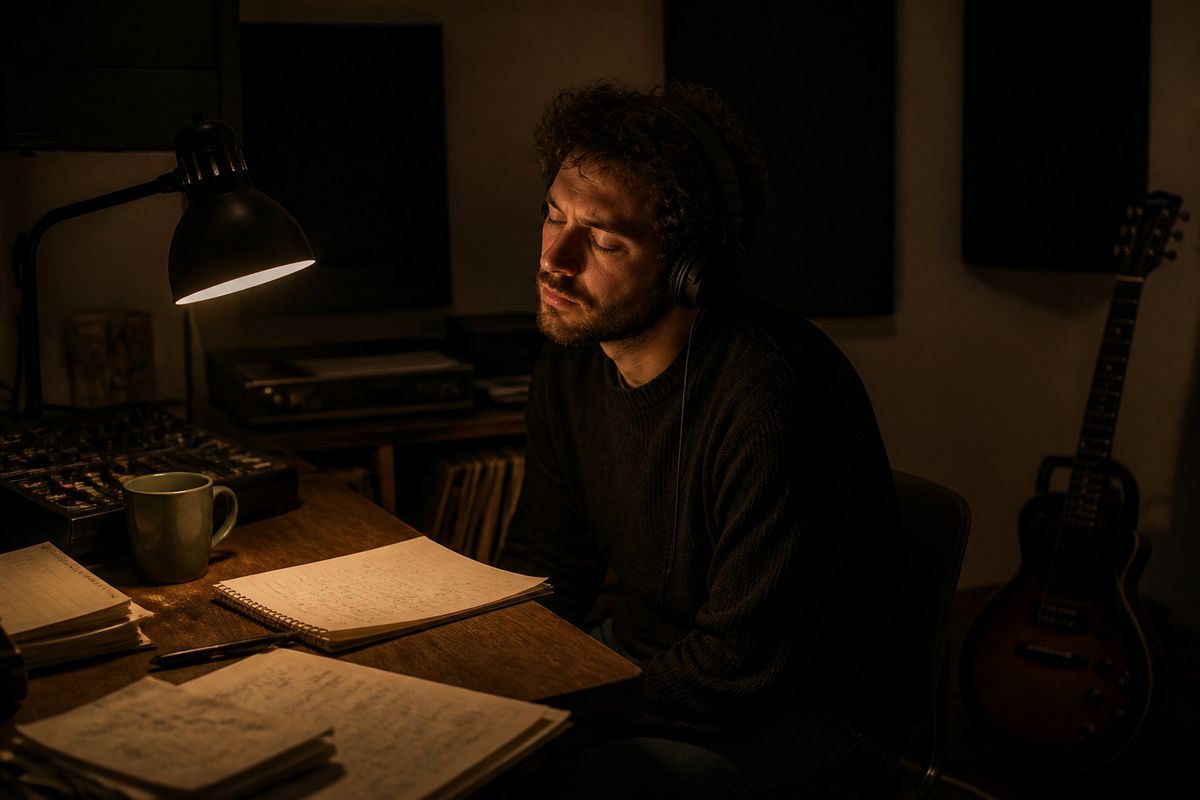
The influence of music on creative processes and inspiration isn't just a feeling artists have described for centuries, it shows up in controlled experiments, too. Music changes your mood, your arousal level, and how easily your attention wanders, and all three of those affect how many ideas you generate and how loosely you connect them. It doesn't hand you talent or a finished draft, but used deliberately it's one of the cheaper, more repeatable ways to shift into a more generative headspace.
What music actually changes in your brain during creative work
Creativity researchers usually split creative thinking into two modes: divergent thinking (generating many possible ideas or solutions) and convergent thinking (narrowing down to one correct or best answer). This distinction matters because music doesn't affect them the same way.
A 2017 study out of Radboud University had participants listen to 15 seconds of calm, happy, sad, or anxious music, or sit in silence, before doing creativity tasks. The group that heard happy, high-arousal classical music scored meaningfully higher on divergent thinking, generating more ideas and more original ones, than the silence group (mean score 93.87 vs. 76.10, a medium-sized effect). The same study found no benefit of any music condition on convergent thinking tasks, like picking the single best idea from a set or solving insight puzzles with one correct answer (Ritter & Ferguson, 2017, PLOS ONE).
Practical takeaway: reach for upbeat, positive-mood music when you're brainstorming or trying to generate options. Switch it off, or switch to something neutral, when you're in the editing or decision-making phase, since that's where music stops helping and can start distracting.
Lyrics are the variable that matters most
Not all "music while you work" advice holds up the same way. A 2022 systematic review covering 154 experiments across memory, language, reasoning, and attention tasks found that background music with lyrics measurably hurt performance on memory and reading-comprehension tasks compared to silence, and was worse than instrumental music on those same tasks. Instrumental background music did not show that same penalty (Cheah, Wong, Spitzer & Coutinho, 2022, Music & Science).
So the genre matters less than whether there are words competing with the words already forming in your head. If your task involves writing, editing, or reading closely, instrumental music (classical, film scores, ambient, lo-fi, or wordless jazz) is the safer choice. Save vocal tracks for tasks that don't route through your language centers, physical craft work, sketching, cleaning up a workspace, or the "get moving" phase before you sit down to actually write.
Matching music to the type of creative task
Idea generation and brainstorming
Use upbeat, major-key, moderate-to-high energy tracks. This is the phase the Radboud study's results apply to most directly, you're trying to produce volume and variety, not a final answer, and positive-mood music is the one with actual support for helping there.
Deep focus, drafting, or reading
Use instrumental-only tracks, ideally without abrupt tempo or volume changes. Classical, ambient, and film-score playlists are common choices because they don't introduce competing verbal content. If you notice yourself re-reading the same sentence, that's a signal the track has too much going on and it's worth switching to something plainer or turning it off.
Editing, revising, or making final decisions
This is where the evidence is weakest for music helping and where lyrics specifically are most likely to hurt, since convergent, evaluative thinking didn't show a benefit in the studies above. Try silence first; if you still want a soundtrack, keep it instrumental and low in the mix.
Creative blocks and stuck points
A short break with music you enjoy won't manufacture an idea, but stepping away from a stalled task and returning to it is a well-documented way to loosen fixation on a wrong approach. Music can make that break more restorative than scrolling a phone, mainly by shifting your mood rather than by any special property of the sound itself.
Building a simple music practice around your work
- Build two playlists, not one. One upbeat and mostly instrumental or with lyrics you know well enough to ignore, for generating ideas. One quiet and strictly instrumental, for focused execution.
- Use the first 15-30 seconds as a mood-setting ritual, not background noise you tune out immediately. The Radboud study's effect showed up after just 15 seconds of listening, which suggests the mood shift, not marathon listening, is doing the work.
- Pay attention to task difficulty. Reviews of this research consistently find music helps more on easier, lower-demand tasks and can hurt on genuinely difficult ones. If a task is hard enough that you're struggling, try dropping the music rather than adding a more "inspiring" track.
- Use a consistent opening track as a start-work cue. This borrows from ordinary habit-formation: a repeated, specific cue makes it easier to transition into work mode over time, the same way a consistent morning routine cues alertness. The effect comes from repetition and consistency, not from any particular song being magic.
What music can't do
It's worth being direct about the limits here. Music does not install skill, knowledge, or expertise you don't already have. It won't fix a project that's stuck because of an unclear brief or a missing piece of research. And the divergent-thinking boost from mood-lifting music is a real but modest effect (medium effect size in controlled testing), not a switch that turns a blank page into a finished piece. Treat it as one input among several, sleep, workload, deadline pressure, and how well-defined the task is will generally matter more than which playlist is running.
FAQ
Does classical music make you smarter or more creative on its own?
No. The often-cited "Mozart effect" on general intelligence has not held up well to replication. What the creativity research above supports is narrower: positive-mood, higher-arousal music can boost idea generation (divergent thinking) in the short term, regardless of genre, and that benefit doesn't extend to tasks with one correct answer.
Should I always work in silence if I need to focus?
Not necessarily, but if the task is verbal (writing, editing, reading) or difficult, silence or instrumental-only music is the safer default based on the evidence above. Lyrics competing with your own internal language processing is the most consistent way music hurts performance.
What if I've always worked well with music and this contradicts my own experience?
Individual differences are real and under-studied compared to average effects, some people concentrate better with a wall of familiar sound and some need silence. Use your own before/after results (did you actually finish more, or just feel busier?) alongside the general patterns here rather than discarding either one.