Creative Communication Techniques for Families
Creative communication techniques for families are the small, deliberate habits (a weekly meeting, a storytelling ritual, a shared drawing session) that give people an easier way in than "we need to talk." Most families don't have a communication problem so much as a format problem: the only channel on offer is a serious face-to-face conversation, and that format doesn't work for a tired eight-year-old or a teenager who shuts down under direct questioning. Changing the format, not the intent, is usually what gets people actually talking.
Why format matters more than intent
Almost every parent already wants to "communicate better." The gap is usually structural: no regular time set aside, no low-pressure way for a quiet kid to bring something up, and no shared language for talking about feelings without it turning into a lecture. Research from Emory University's Family Narratives Project found that children in families who talked about hard events in coherent, emotionally open ways showed better self-esteem, higher social competence, and less anxiety than children in families that avoided or flattened those conversations. The technique matters less than whether it actually gets used consistently.
1. Storytelling nights
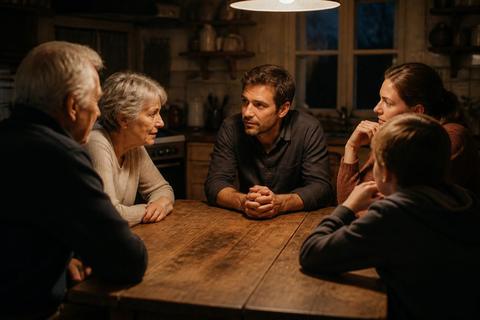
Set a recurring 20-30 minute slot (Sunday dinner, a car ride, right before bed) where each person answers one prompt: a specific moment from their week, a story about a grandparent, or "a time things went wrong and got better." The "went wrong and got better" prompt matters more than it sounds like it should. Researchers Marshall Duke and Robyn Fivush found that kids who could describe family setbacks with a clear arc, not just triumph, not just disaster, but an honest middle, coped better with stress two years later than kids who only heard tidy success stories or none at all.
How to run it
- Rotate who picks the prompt each week so it isn't always a parent steering the conversation.
- Keep it under 30 minutes total. This works better as a habit than as an event.
- Let kids tell fictional or exaggerated stories too. The goal is practice putting experience into words, not factual accuracy.
2. Drawing and making things alongside talking
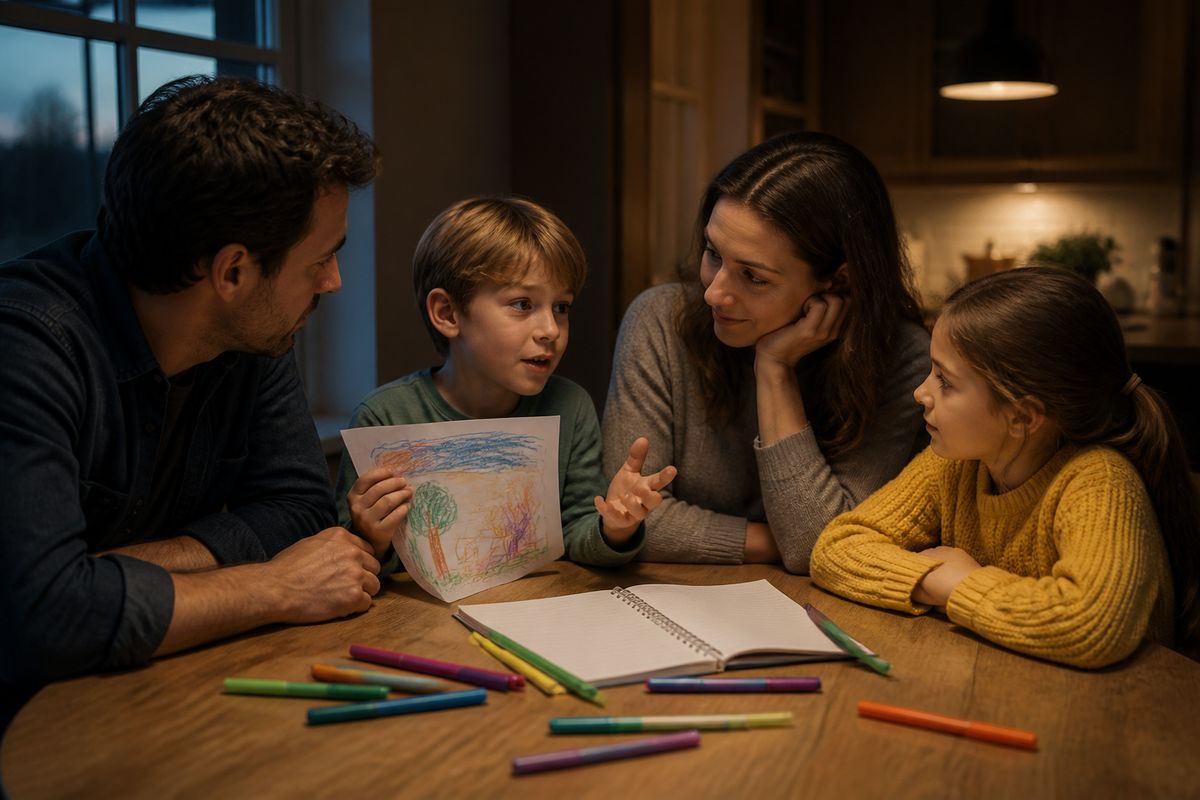
For kids who freeze up when asked "how was school," put a marker or some clay in their hands first and talk while everyone's making something. This isn't a substitute for words, it's a way to lower the pressure of eye contact and silence so words come out easier. A systematic review of art therapy with children and adolescents notes that art-making lets kids get in touch with feelings they can't easily put into words, particularly when they're asked to formulate experiences they haven't fully processed yet. You don't need a therapist in the room for the basic mechanism (busy hands plus low eye-contact pressure) to help at home.
How to use it
- Keep a shared bin of paper, markers, and clay accessible without asking.
- Ask about the drawing after it's done ("what's happening here?") rather than narrating while they work.
- Use it especially for topics kids struggle to say out loud: worries, a fight with a friend, something that scared them.
3. Video calls and shared photo albums for distance
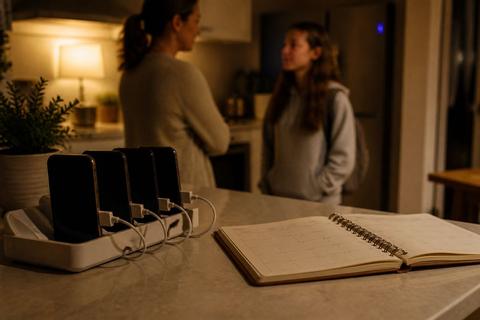
For families split across households, cities, or time zones, a scheduled weekly video call beats sporadic texting. Put it on the calendar at a fixed day and time so it isn't the first thing that gets skipped. A shared photo album (Google Photos or similar) where anyone can drop a picture and a caption gives people something concrete to react to instead of "what's new" small talk, which is a hard question to answer well.
What actually helps vs. what doesn't
- Helps: a fixed weekly call time, shared photo threads, voice notes for kids too young to type well.
- Doesn't help: group chats with no regular rhythm, since they get skimmed and abandoned within a few weeks.
4. Reading the room: tone and body language
Kids pick up on tone and posture before they process the words, especially when they're younger or upset. Crossed arms, a flat tone, or a phone in hand while "listening" all signal disengagement regardless of what's said. This doesn't mean nonverbal cues are most of communication. That claim traces back to a 1960s lab study on ambiguous emotional expressions that has been widely misapplied outside the narrow condition it tested. What it does mean, practically: put the phone down, face the person, and match your tone to what you're actually saying, because mismatches are what kids notice and remember.
5. Family meetings
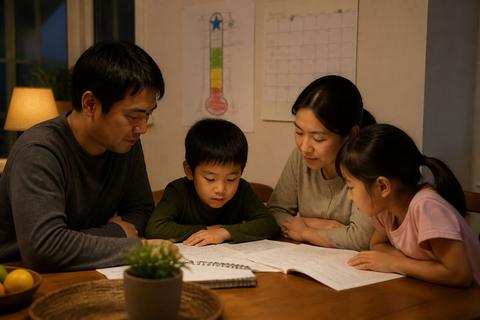
A short, regular meeting (15 to 20 minutes, same day and time each week) gives chores, schedules, and low-grade conflicts a dedicated slot instead of leaking into every other conversation. NC State Extension's guidance on family meetings recommends a few concrete rules that make the difference between a meeting kids tolerate and one they dread: no interrupting, criticizing, or correcting, using a "go-around" so everyone gets a turn to speak, and a short written agenda so nobody's ambushed by a topic. The same guidance suggests giving younger kids something to do with their hands, like drawing, while older family members talk through logistics.
A workable structure
- Start with one good thing from the week (30 seconds each, no exceptions).
- Go around the agenda items in order, one person speaks at a time.
- End with next week's calendar and who's doing what chore.
Skip the meeting if it turns into disciplining one kid in front of everyone else. That kills buy-in fast and teaches kids to dread the format.
6. Games instead of grilling
Charades, Pictionary, and two-minute role-swap ("you be me for this argument, I'll be you") lower the stakes of a conversation that would otherwise feel like an interrogation. The mechanism is straightforward: a game gives everyone a script and a reason to be there beyond "mom wants to talk," which matters for kids who go quiet under direct questioning. This works best as a warm-up before a harder conversation, not as a replacement for one. Ten minutes of Pictionary before a talk about a report card, not instead of it.
What this does and doesn't do
These techniques make it easier for family members to start talking and give quieter or younger kids a lower-pressure way in. They do not resolve serious conflict on their own, replace family therapy when there's ongoing crisis or abuse, or work as a one-time fix. The research on family storytelling and meetings both point to consistency over months, not a single good conversation, as what actually predicts better outcomes.
FAQ
How often should we hold a family meeting?
Weekly works for most households. Twice a month is enough if your family's schedule is unpredictable, but going longer than that tends to let small issues pile up until the meeting becomes a complaint session.
What if my teenager refuses to participate?
Shorten it, drop the "share your feelings" framing, and keep it strictly logistical (schedules, chores, money) for a few weeks. Teenagers often opt back in once a meeting stops feeling like a forced emotional check-in.
Do these techniques work for blended or long-distance families?
Yes, with adjustments. Video calls replace in-person meetings, and shared photo albums or a group chat with a fixed weekly prompt can substitute for storytelling nights when everyone isn't in the same room.