
Exploring Different Journaling Styles for Self-Exploration
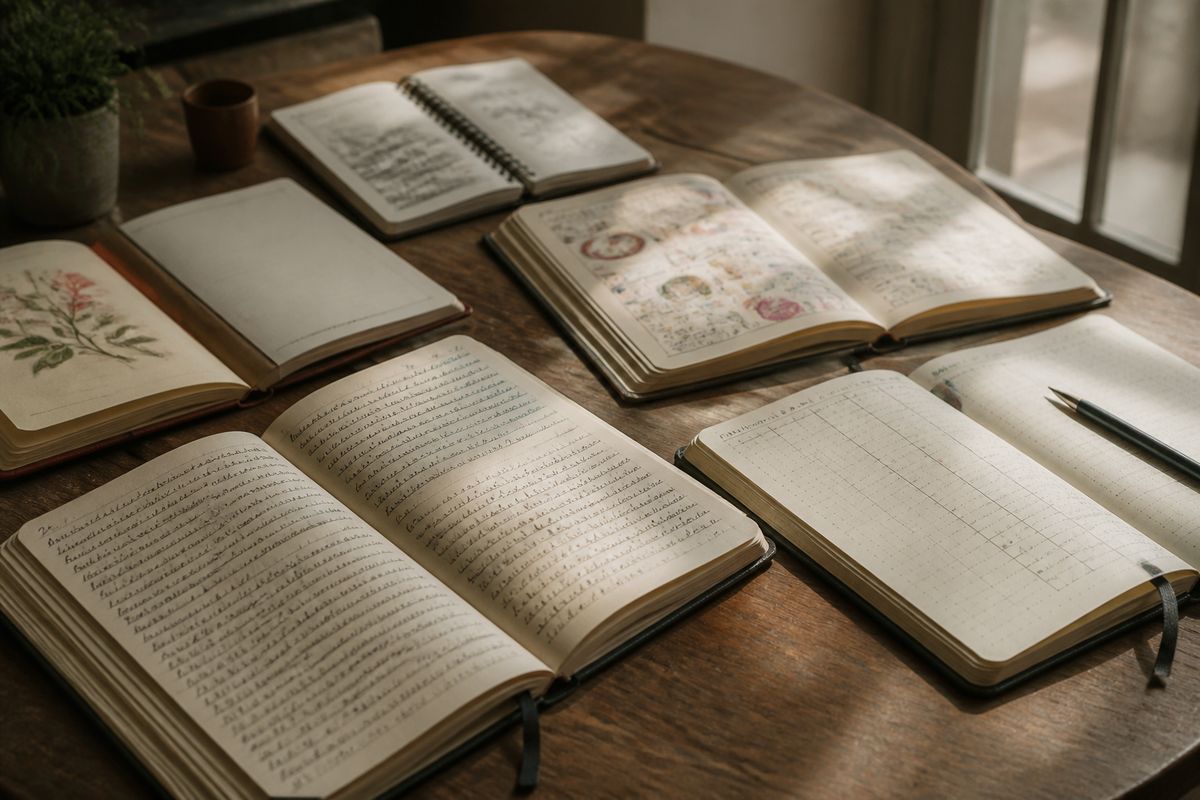
Exploring different journaling styles for self-exploration usually comes down to one problem: people try the first format they hear about, it doesn't fit how their mind works, and they quit within a week. Free writing suits someone who thinks in a rush of unfiltered sentences. Bullet journaling suits someone who thinks in lists. Neither is more "advanced" than the other. This guide walks through six distinct styles, what each one is actually good for, and a specific way to start each one tonight.
Why the Style You Pick Matters
Journaling isn't one practice with minor variations, it's a set of different tools that produce different kinds of output. Some styles are built for emotional processing, some for organizing a chaotic schedule, some for pattern-spotting over months. Picking a style that matches what you actually need from the page cuts down on the two most common failure modes: staring at a blank page with no idea what to write, or writing pages that feel pointless afterward.
None of these styles change your circumstances by the act of writing about them. What a consistent practice can realistically do is help you notice patterns in your own behavior, work through a stressful event on paper instead of carrying it around all day, and clarify what you actually want before you act on it.
1. Free Writing
Free writing is unedited, stream-of-consciousness writing: you keep the pen moving for a set amount of time and don't stop to fix grammar, spelling, or structure.
What it's good for
- Getting past a mental block. When you don't know what's bothering you, free writing often surfaces it faster than trying to name it directly.
- Lowering the stakes of writing. There's no wrong way to do it, which makes it a good entry point if journaling has felt intimidating before.
How to start tonight
- Set a timer for 10 minutes.
- Write the first sentence that comes to mind, even if it's "I don't know what to write."
- Keep the pen moving until the timer ends. Don't reread mid-session.
- Afterward, skim once for a sentence or theme that surprised you. That's usually the useful part.
2. Reflective Journaling
Reflective journaling means reviewing a specific experience, usually the day just finished, and thinking through what it meant rather than just recording that it happened.
What it's good for
- Learning from repeated situations. If the same argument or the same mistake keeps showing up, reflective writing is where you'll spot the pattern.
- Slowing down reactive thinking. Writing about a hard conversation a few hours later, instead of stewing on it, tends to produce a calmer read of what happened.
How to start tonight
- Give yourself 10 to 15 minutes at the end of the day.
- Answer three fixed questions: What happened today that actually mattered? What did I feel during it? What would I do differently if it happened again?
- Write in full sentences, not just bullet fragments. The detail is what makes a pattern visible six weeks from now.
3. Gratitude Journaling
Gratitude journaling means writing down specific things you're thankful for on a regular schedule, rather than a general sense of positivity.
This is one of the more studied journaling formats. A research summary from the University of Rochester Medical Center reports that gratitude practice is linked to reduced stress, improved mood, and better sleep, and that a 2021 review found gratitude journaling associated with improvements in heart-health markers like blood pressure. That's evidence for a modest, real effect on mood and stress, not a claim that gratitude journaling attracts money, relationships, or events into your life.
What it's good for
- Counteracting a negativity spiral. On weeks where everything feels like it's going wrong, this format forces you to look at the other half of the picture.
- Building a low-effort daily habit. It takes under five minutes and doesn't require deep emotional processing, which makes it easier to sustain than some other styles.
How to start tonight
- Pick a consistent time, evening works well since you're reviewing a day that already happened.
- Write three specific things, not "my family" but "my sister called just to check in on Tuesday."
- Specificity matters more than volume. Three detailed entries do more than ten vague ones.
4. Bullet Journaling
Bullet journaling combines short-form journaling with task and habit tracking, using symbols, lists, and custom layouts (often called "spreads") in one notebook.
What it's good for
- People who think in lists, not paragraphs. If long-form writing feels like a chore, quick bullets with a key (dot for task, dash for note, circle for event) fit better.
- Combining planning with reflection in one place. A monthly spread for tasks next to a short nightly log means you're not maintaining two separate systems.
How to start tonight
- Grab any notebook, dotted or lined both work; the "correct" notebook is not what makes this effective.
- Set up three symbols only, one for tasks, one for notes, one for events. Adding more than that early on tends to overcomplicate the system before it becomes a habit.
- Write a simple monthly log listing the date and one line per day for the current month.
- Add a nightly page with tomorrow's top three tasks and one reflective line about today.
5. Art Journaling
Art journaling pairs images, doodles, or collage with short written notes, as an alternative for people who process feelings visually rather than verbally.
What it's good for
- People who find blank-page writing intimidating. Starting with a color or a shape instead of a sentence lowers the barrier to getting something on the page.
- Processing feelings that are hard to name. Sometimes a scribbled color says more accurately what's going on than a sentence does.
How to start tonight
- Gather a few basic supplies: colored pencils or markers, and a mixed-media or plain sketchbook.
- Pick one color or shape that matches how you feel right now, before deciding what it "means."
- Add one written sentence next to or underneath the image. It doesn't need to explain the art.
- Skip trying to make it look finished. This is a working page, not a piece to display.
6. Prompt-Based Journaling
Prompt-based journaling means answering a specific question instead of starting from a blank page, which is useful on days when you have no clear topic in mind.
What it's good for
- Beginners. A defined question is easier to start than an open invitation to "write about your feelings."
- Breaking through writer's block on any other style. Even people who normally free write or reflect can use a prompt on an off day.
Prompts worth trying
- "What's one thing I've been avoiding this week, and why?"
- "Describe a moment today when I felt most like myself."
- "What's a belief about myself I've been carrying that I'm not sure is still true?"
How to start tonight
- Choose one prompt, not several. Depth on one question beats a fast pass through five.
- Write until the prompt feels answered, there's no minimum length that makes it "count."
- Keep a running list of prompts you like so you're not searching for one every time you sit down.
Matching a Style to How You Actually Think
- If you're overwhelmed and can't name why: start with free writing.
- If the same problem keeps repeating: start with reflective journaling.
- If you're stuck in a low mood most days: start with gratitude journaling.
- If your week feels chaotic and unplanned: start with bullet journaling.
- If writing sentences feels like a wall you can't get over: start with art journaling.
- If you sit down with nothing to say: start with prompt-based journaling.
You don't have to commit to one permanently. Many people run a bullet journal for planning and add a gratitude page or a prompt entry on the same nightly pass. Pick one style, run it for two weeks before judging it, and only then decide whether to switch or combine it with another.
FAQ
Is one journaling style better than the others?
No. Each style is suited to a different goal, emotional processing, planning, habit tracking, or creative expression. The best style is the one that matches what you need this week and that you'll actually keep doing.
How long should a journaling session take?
Most of these styles work in 10 to 20 minutes. Gratitude and bullet-journal check-ins can be done in under five; free writing and reflective journaling tend to need the fuller 10 to 15 minute window to get past surface-level thoughts.
Can journaling replace therapy?
No. It can support mood, processing, and self-awareness, but it isn't a substitute for treatment if you're dealing with clinical depression, anxiety, trauma, or another mental health condition. A licensed professional is the right resource for those.
What if I miss several days in a row?
Pick the notebook back up without a catch-up entry trying to cover everything you missed. A consistent practice over months matters far more than an unbroken daily streak.