Exploring the Connection Between Travel and Creative Inspiration
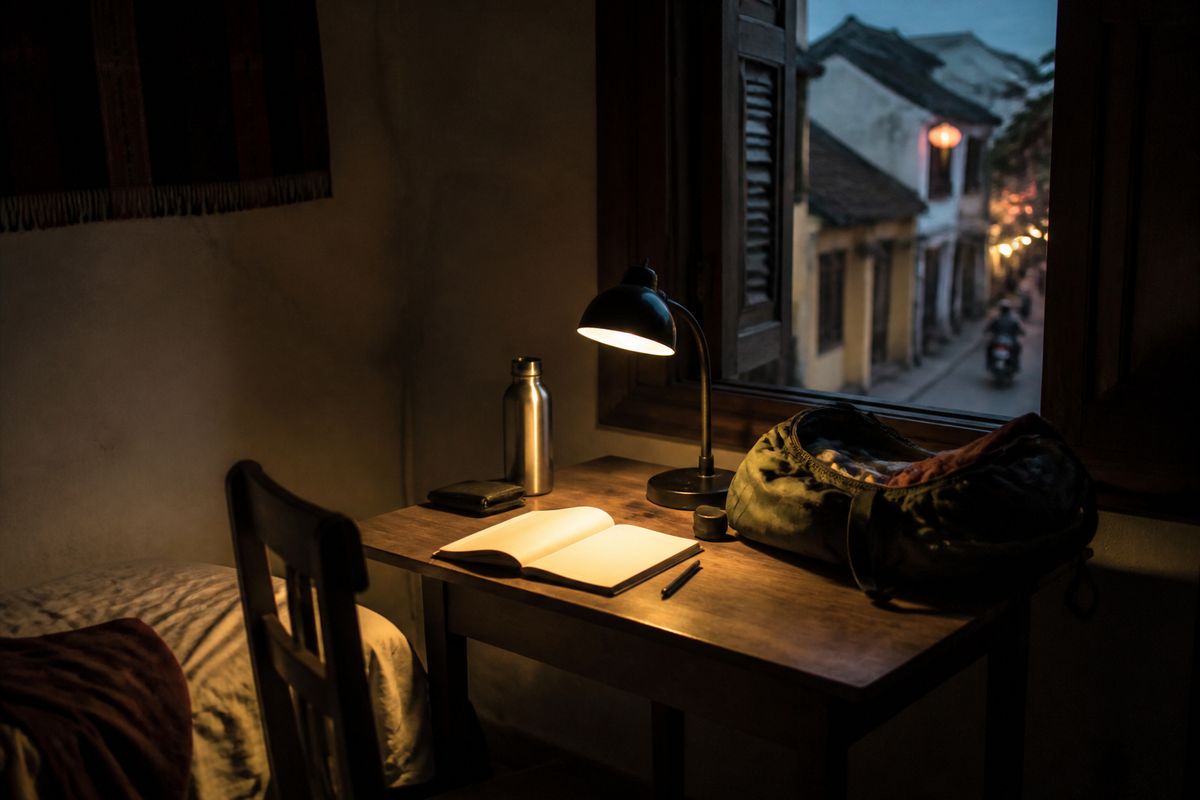
Exploring the connection between travel and creative inspiration starts with a simple observation: a lot of writers, painters, and musicians point to a specific trip as the moment an idea clicked. That is not a coincidence and it is not magic. Travel removes you from your usual routines and cues, and that disruption is what does the creative work.
Why Leaving Your Routine Helps
Novelty Forces New Connections
Most of your day runs on autopilot: same commute, same desk, same handful of decisions. That repetition is efficient, but it does not generate new ideas. When you travel, you lose the autopilot. You have to figure out an unfamiliar train system, order food you can't fully read, or navigate a city where the streets don't follow a grid. Each of those small problems forces your brain to make new connections instead of running the usual script, which is the raw material creative thinking runs on.
The effect depends on what you actually do with the unfamiliar situation. Sitting on a beach chair in a new country is a change of scenery, not a cognitive workout. Actively engaging with the novelty, ordering from a menu you don't understand, asking a stranger for directions, trying to fix a problem without your usual resources, is what turns a trip into something that changes how you think.
Nature Exposure Measurably Restores Attention and Boosts Creative Problem-Solving
This is one of the few claims in this space with a real controlled study behind it. Researchers tested Outward Bound backpackers on the Remote Associates Test, a standard measure of creative problem-solving, both before a four-day wilderness trip and partway through it (with phones and other devices left behind). The group tested on day four solved roughly 50% more problems on average than the group tested before the trip started. The leading explanation is Attention Restoration Theory: constant screens and city stimulation drain your capacity for focused attention, and low-arousal natural environments let that capacity recover, which frees up mental bandwidth for creative work.
The practical takeaway is not "go on a four-day hike," it's that a walk in an actual park, without your phone, does more for your ability to focus and generate ideas than the same walk with your phone out. If you're traveling somewhere with a real trail or a large park, an unplugged hour or two isn't a nice-to-have, it's the part of the trip most likely to change how you think for the rest of the day.
Storytelling Is the Bridge Between Travel and Output
Turn Experiences Into Material, Not Just Memories
Travel gives you raw experience, but it does not automatically become creative output. The bridge is turning what happened into something written down, sketched, or told to someone else. Writers who come back from a trip with usable material are almost always the ones who processed it in some way during the trip, not just the ones who had an interesting time.
Local Stories and Histories Are Free Research
Museums, guided walks, local newspapers, and conversations with people who live somewhere are a cheap way to get material you cannot get by looking at a landmark from the outside. A ten-minute conversation with a shop owner about how a neighborhood has changed is often more useful to a writer than an hour at the main tourist site.
A Practical System for Capturing Travel-Driven Ideas
Write for 10-15 Minutes at the End of Each Day
You do not need an elaborate travel journal. Expressive writing research, going back to psychologist James Pennebaker's original studies, has repeatedly found that writing about your experiences and how you felt about them, even in short daily sessions, has measurable psychological benefits and helps you process what happened rather than just accumulate memories you'll forget by the time you're home. Ten to fifteen minutes before bed, writing what happened and what actually struck you about it, is enough. You are not writing publishable prose here, you're building the raw material you'll shape later.
Separate Collection From Editing
While you're traveling, only collect: notes, photos, ticket stubs, three-word phrases that stuck with you. Do not try to turn any of it into a finished piece while you're still moving. The editing and shaping happens afterward, when you have distance and can tell which moments actually mattered versus which just felt significant in the moment.
Talk to People Who Live There
A structured way to do this: ask one local person per day a specific question, not "what should I see" but something like "what's changed here in the last ten years" or "what do people from here actually eat on a normal Tuesday." Specific questions get specific, usable answers. Generic questions get tourist-brochure answers you could have found online.
Build in Unscheduled Time
If every hour of a trip is booked, there is no room for the tangent that turns into your best material. Leave at least one afternoon per multi-day trip with nothing planned. That is not wasted time, it is the time slot where the useful, unexpected stuff tends to happen.
Go to One Local Event You Didn't Plan For
A neighborhood festival, a small gallery opening, a night market, whatever is happening while you're there that wasn't on your itinerary. These are lower-effort than seeking out formal cultural institutions and often produce more specific, less generic material.
What This Does and Doesn't Do
Travel does not guarantee a creative breakthrough, and showing up somewhere new is not a substitute for actually sitting down and doing the work of writing, painting, or composing when you get home. What the research above supports is narrower and more useful: novel environments that require active engagement build cognitive flexibility, time in nature away from screens measurably restores attention and supports creative problem-solving, and writing about your experiences shortly after they happen helps you process and retain them. Those are the three levers worth pulling on your next trip, not a promise that the trip itself will hand you your next project.
FAQ
Do I need to travel far or expensively for this to work?
No. The mechanism is novelty and active engagement, not distance. A day trip to a town you've never visited, using unfamiliar transit, or a solo walk in an unfamiliar part of your own city can produce the same kind of disruption to routine that a longer trip does. What matters is that you're actually navigating something unfamiliar, not passively observing it.
What if I don't have time to journal every day while traveling?
Even short, infrequent entries help. Pennebaker's own research used sessions as short as a few minutes, and he has said he personally only writes this way a few times a year, when something is actually worth processing. Consistency matters less than actually doing it when something strikes you.
Can I get the nature-related focus benefits from a park near home instead of a wilderness trip?
Yes. The mechanism is unplugged time in a low-stimulation natural setting, not remoteness. A phone-free hour in a local park is a smaller dose of the same effect documented in the backpacking study, not a completely different thing.