
Gratitude Meditation: Techniques for Inner Peace
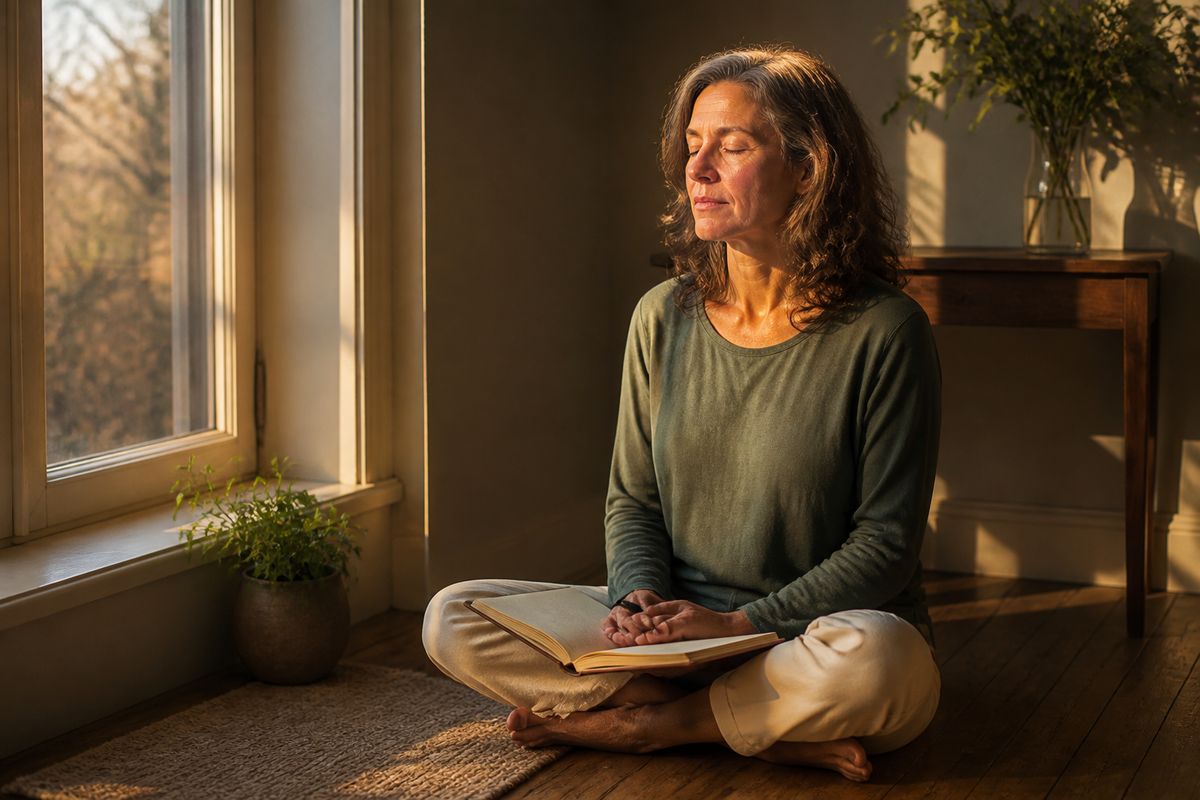
Gratitude meditation is a short, structured way of directing attention toward specific things you appreciate instead of letting the mind default to worry or to-do lists. It won't erase real stressors, but as a regular practice it's one of the better-studied tools for nudging mood, sleep, and stress response in a measurable direction. This guide covers what the technique actually does, what it doesn't, and six ways to practice it.
What gratitude meditation is (and isn't)
Gratitude meditation pairs a few minutes of quiet, focused breathing with a deliberate recall of one to three specific things you're thankful for, not a vague scan for "good things," but naming a person, moment, or detail and sitting with it long enough to notice the feeling. It is a mindset and attention exercise. It does not attract money, fix relationships on its own, or change events outside your control. What it can do is shift what your mind rehearses by default, which has downstream effects on how you sleep, how you interpret setbacks, and how you treat the people around you.
The best-known evidence for this comes from a 2003 study by psychologists Robert Emmons and Michael McCullough, who had college students keep weekly records of either things they were grateful for, hassles they'd experienced, or neutral events. The gratitude group reported more positive affect and fewer physical complaints than the hassles group over the study period, and in a follow-up daily version, gratitude journalers were also more likely to report helping someone or offering emotional support. The effect on mood was the most consistent finding across their three studies, not a cure-all, but a real, replicated shift in day-to-day affect.
What the research actually supports
Mood and stress
Across multiple controlled studies, people who log specific things they're grateful for report higher positive affect and lower reports of stress and physical complaints than people who log hassles or neutral events. The size of the effect is modest, not dramatic, and it fades if the practice stops, this is a habit with a use-it-or-lose-it profile, similar to exercise.
Sleep
Gratitude has a more specific, well-documented link to sleep. A study published in the Journal of Psychosomatic Research found that trait gratitude predicted better subjective sleep quality, longer sleep duration, and shorter time to fall asleep, and that the effect was explained by more positive (and less negative) thinking right before bed, not by gratitude directly changing physiology. Practically: the payoff shows up if you do the reflection in the hour before sleep, not at a random point in the day.
Positive emotion from loving-kindness practice
A meta-analysis covering multiple randomized trials found that loving-kindness meditation produces a medium-sized increase in daily positive emotions compared to waitlist controls, though the same review cautions that effect sizes vary by study design and the practice isn't equally effective for everyone. Read that as: worth trying for a few weeks to see if it works for you, not a guaranteed fix.
What's thin or unsupported
Claims that gratitude meditation "strengthens relationships" or "builds resilience" are directionally consistent with the mood and prosocial-behavior findings above, but there's no controlled study showing gratitude practice repairs a specific relationship or reliably prevents burnout. Treat those as plausible side effects of feeling calmer and more even-keeled, not as guaranteed outcomes.
Six ways to practice it
1. Set up a two-minute space
You don't need a ritual altar. Sit somewhere you won't be interrupted for two to five minutes. Phone on silent, not just vibrate, a buzzing phone six inches away defeats the point.
2. Start with 60 seconds of breathing
Inhale for a count of four, hold for four, exhale for six. Six rounds is about a minute. The extended exhale is the part that matters: a longer exhale relative to inhale is the standard technique for downshifting a stressed nervous system before you try to focus on anything else.
3. Gratitude journaling
Write three specific things you're grateful for, not general categories. "My sister called during a hard week and just listened" beats "my family." Specificity is what separates a reflective practice from a rote checklist, and it's the detail most people skip when the habit starts to feel routine. Five minutes, same time each day, works better than sporadic long entries, consistency matters more than volume.
- Pick a medium once and stick with it, a notebook you keep by the bed, or a notes app, so you're not deciding on the coding you'll use each night.
- Anchor it to an existing habit, after brushing your teeth, before closing your laptop, so it doesn't depend on willpower.
- Name the specific detail, not the category: who, what happened, why it registered.
4. Visualization
After your breathing, picture one specific moment tied to something you're grateful for, not an aspiration, a memory. Reconstruct it with detail: where you were, what you heard, who was there. This is a recall-and-savor exercise, a way of extending the emotional payoff of something that already happened, not a technique for summoning something that hasn't.
5. Guided audio sessions
Apps like Insight Timer and Headspace have gratitude-specific tracks, usually 5 to 15 minutes. These are useful when you're new to the practice and want a pace set for you, or on days when your own focus is scattered. Pick one length and stick with the same track for a week or two rather than browsing a new one every session, familiarity is part of what makes it easy to drop into.
6. Loving-kindness phrases
Silently repeat a short set of phrases, "may I be well, may I be at ease", directed first at yourself, then at someone you care about, then at someone neutral. This is the practice with the clearest randomized-trial evidence behind it for boosting daily positive emotion, though as noted above the effect is moderate and study-dependent, not universal.
Folding it into a day without formal sessions
- Morning: name one specific thing before you check your phone.
- Meals: one breath and one thought about where the food came from before the first bite, a brief pause, not a ritual.
- Before bed: given the sleep research above, this is the highest-leverage slot if you only have time for one check-in a day.
How much and how long
Most of the studies behind these findings used daily or near-daily logging over one to ten weeks, with sessions in the 5 to 15 minute range. There's no evidence that longer sessions produce proportionally bigger effects, consistency over weeks matters more than the length of any single sitting. Give it three to four weeks before deciding whether it's doing anything for you; mood and sleep effects from a single session are usually too small to notice.
FAQ
Is gratitude meditation the same as manifestation?
No. Manifestation claims that focused thought or feeling can directly change external events. Gratitude meditation is a psychological practice with evidence for mood, sleep, and prosocial behavior, it works by changing what you pay attention to and how you feel, not by acting on the world directly.
Do I need to meditate for it to count as gratitude practice?
No. Journaling alone, without any breathing or seated component, produced measurable effects in the original Emmons and McCullough studies. Meditation adds a body-calming layer on top, which helps some people focus, but it's not a requirement.
What if I can't think of anything to be grateful for on a bad day?
Scale down: a specific comfortable object, a text from a friend, the fact that a hard task is over. The research doesn't require the item to be significant, only specific and genuine.
Can this replace treatment for anxiety or insomnia?
No. The sleep and mood research described here involves modest, average effects in general and student populations, not clinical treatment outcomes. If sleep or mood problems are persistent or severe, talk to a doctor or therapist rather than relying on a journaling habit alone.