How to Blend Different Art Forms for Enhanced Creativity
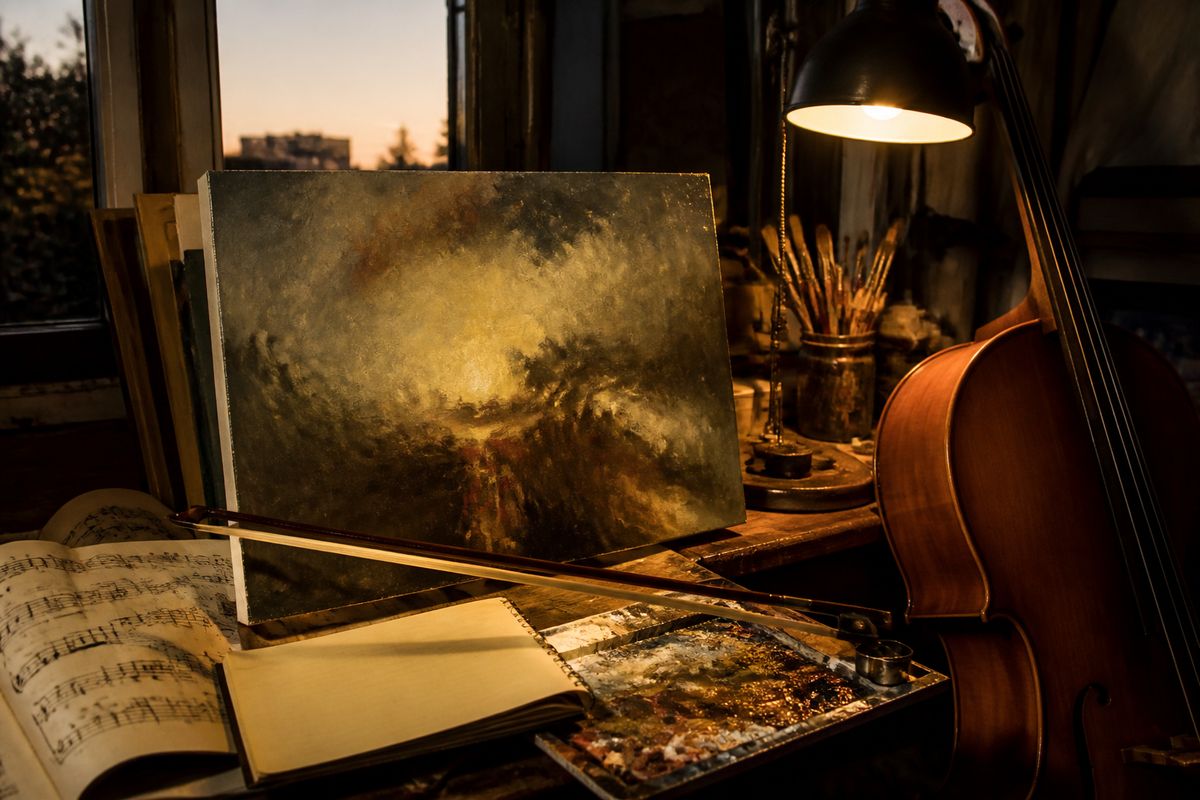
Blending different art forms for enhanced creativity means deliberately pairing two disciplines, say painting and poetry, or dance and film, so techniques from one push you past habits you've built in the other. Working across mediums is not a mystical shortcut to inspiration. It is a way to force your brain out of the shortcuts it has learned inside a single discipline, and there is real research behind why that works.
Why crossing disciplines actually helps
When you stay in one medium for years, you build efficient habits: a painter reaches for the same three compositions, a writer defaults to the same sentence rhythms. Those habits are useful (they save time) but they also cap what you'll try next. Bringing in a second discipline forces you to solve the same creative problem with a different set of constraints, and that friction is where new choices tend to show up.
A quasi-experimental study of 145 university students found that those taught through an interdisciplinary format, nursing content co-taught with design faculty, scored significantly higher on standardized creative-thinking tests (Torrance Tests of Creative Thinking) and on team-creativity measures than students taught the same material in a single-discipline format (Ho et al., 2022). The effect wasn't subtle: the intervention group's scores were significantly elevated across every creativity dimension measured. That's evidence for a mechanism, not a guarantee, but it lines up with what working artists report: the discomfort of a second discipline's rules is what produces new decisions, not talent you either have or don't.
What this does not mean: mixing mediums won't make you a better painter or writer on its own, and it won't manufacture inspiration out of nowhere. It's a method for generating more raw options to choose from, which you still have to shape with craft in each individual medium.
Start with one strong medium, not five weak ones
Pick the one or two forms you already have real skill in, painting, prose, composition, choreography, whatever it is, before you add anything else. Blending works because it stretches an existing skill against new constraints. If you don't have a skill to stretch, adding more mediums just produces five mediocre outputs instead of one considered one.
- Give your primary medium at least 6-12 months of regular practice before treating a second one as more than play.
- Pick a second medium that shares a structural idea with your first (rhythm in music and rhythm in editing; composition in painting and blocking in theater) so the transfer has something to attach to.
Four ways to combine mediums, ranked by how fast you can try them
1. Constraint transfer (fastest, no collaborator needed)
Take a rule from medium B and apply it inside medium A. A musician writes a poem using only the chord progression of a song they know (verse, verse, bridge, resolve) as the structural map for the stanzas. A painter blocks a canvas the way a film editor blocks a scene, three "shots" of visual attention instead of one composition. This costs nothing but an afternoon and tells you fast whether the pairing has anything to offer.
2. Mixed-media single piece
Combine two mediums inside one finished object rather than switching between them. Concretely: collage photographs or newsprint into a painting; set a piece of your own poetry to a melody you've written; record spoken word over a soundscape you built. Start small, one collaged element, one four-line stanza set to music, before committing to a full piece. Most of the value shows up in the first attempt; the fifth variation on the same trick teaches you less.
3. Direct collaboration with a practitioner in the other discipline
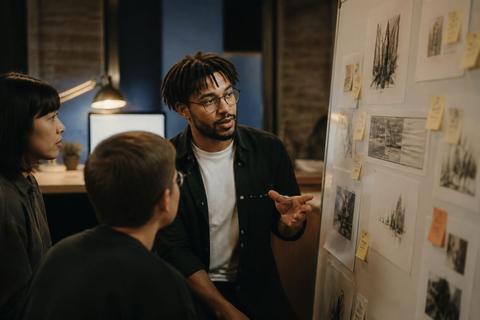
Pair with someone who actually works in the second medium instead of imitating it from the outside. A choreographer and a filmmaker shoot a short film where the choreography drives the camera moves rather than the other way around. A visual artist and a composer build an installation where a soundscape changes in response to how close a viewer stands to a painting. Set one shared constraint before you start (a theme, a length, a location) so the collaboration has an edge to work against instead of open-ended "let's see what happens," which tends to produce unfocused work.
4. Structured learning in the second discipline
Take an actual class, not just a tutorial video, in the medium you're borrowing from. A painter interested in narrative takes a short-fiction workshop; a musician curious about physical expression takes eight weeks of a dance class. The structure and feedback of a class surfaces habits and vocabulary you wouldn't pick up by watching alone, and a few weeks is usually enough to change how you think about your primary medium even if you never become proficient in the second one.
Set a boundary before you start
Open-ended "combine everything" experiments usually produce muddled work. Pick one theme or question and let it be the only thing tying the mediums together: identity, a specific place, a single memory. A dance-and-live-music piece built around "the week my father moved out" will cohere; a dance-and-live-music piece built around "connection" in the abstract usually won't, because there's nothing concrete constraining the choices.
Expect a chunk of it to not work
Not every cross-medium experiment produces something worth showing. That's expected, not a sign you picked the wrong pairing. Keep a short log after each attempt: what you tried, what felt forced, what one moment actually worked. Over ten or so attempts, the log usually shows a pattern (a particular pairing, a particular constraint) worth developing further, and it stops you from repeating the same failed combination without noticing.
FAQ
Do I need to already be good at the second art form?
No. You're borrowing structure, rhythm, or constraint from it, not producing a polished piece in it. A painter taking a poetry workshop isn't trying to become a poet; they're trying to notice how line breaks control pacing, then bringing that idea back to composition.
How long before blending mediums actually changes my primary work?
There's no fixed number, but treat it like any other skill: a handful of short experiments (constraint transfers, a mixed-media sketch) over a month or two is enough to tell you whether a pairing has legs. If nothing from the second medium has shown up in your primary work after that, try a different pairing rather than forcing the current one.
Does journaling the process actually help, or is that just busywork?
It helps, and it's one of the more studied parts of this practice. Regular reflective writing about a process, what worked, what didn't, is associated with measurable reductions in stress and improvements in wellbeing; in one of the foundational research programs on expressive writing, college students who wrote about their experiences visited the student health center at roughly half the rate of a control group (American Psychological Association). For creative work specifically, the log doesn't need to be literary. A few honest lines after each session, what you tried and whether it worked, is enough to make the next attempt sharper.