
How to Set Up a Creative Workspace That Sparks Innovation
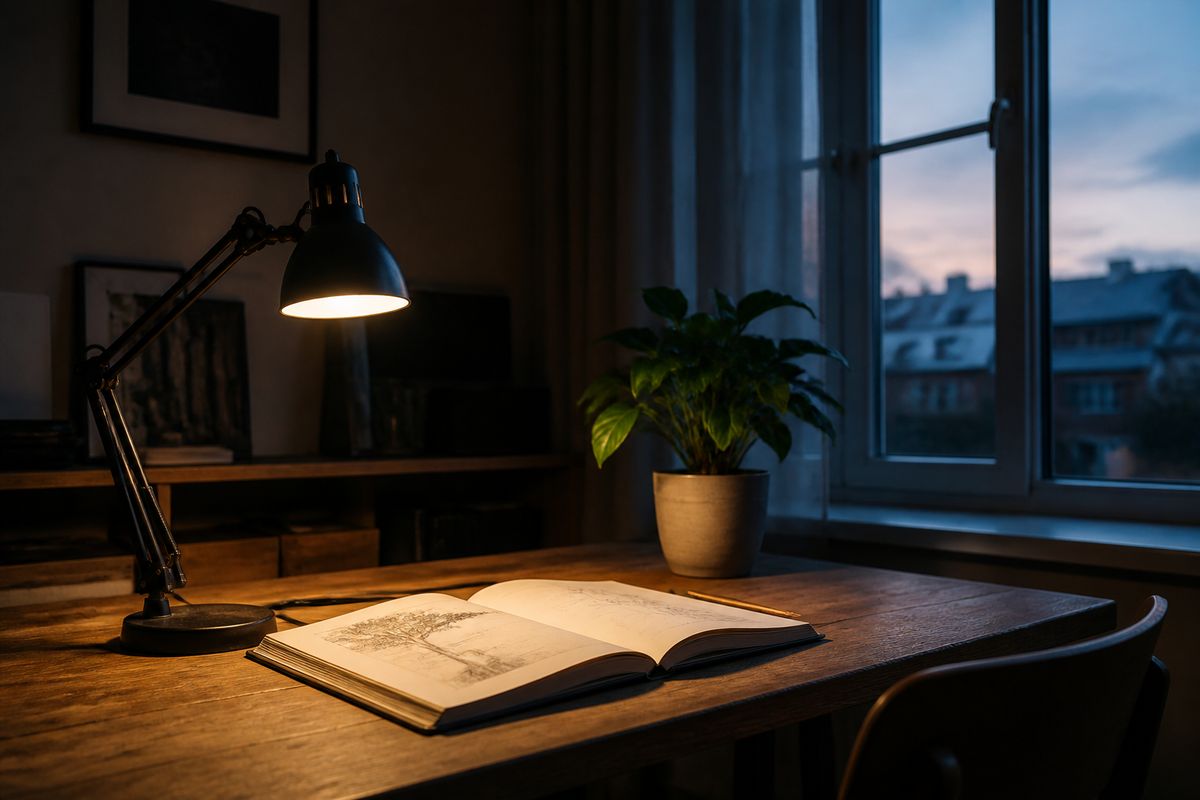
Setting up a creative workspace that sparks innovation is less about buying the right furniture and more about removing the friction between you and focused work. The physical space you sit in every day shapes how easily you get started, how long you can concentrate, and how often your mind wanders toward new ideas instead of toward the clutter on your desk. Here's a practical, room-by-room way to build one.
Start by Naming What You Actually Do
Before buying anything, write down three things: the kind of work you do most (writing, design, coding, planning), whether you work alone or with others most of the day, and what tends to pull your attention away right now. A writer who needs two hours of uninterrupted quiet has different requirements than a designer who bounces between a laptop, a sketchbook, and reference images pinned to a wall. Skipping this step is why so many "inspiring" home offices get used for a week and then abandoned.
Pick a Location on Purpose
- Natural light, if you can get it. Desks near windows tend to cause less eyestrain and daytime drowsiness than desks lit only by overhead fluorescent lighting. If yours can go within a few feet of a window, put it there; if not, a daylight-balanced desk lamp (around 5000K) is the next best option.
- Quiet by default. If your work needs sustained focus, choose the room with the least foot traffic, not the biggest one. A closet-sized nook with a door beats an open corner of the living room.
- A line of sight to something green, for its own sake. A field study of indoor plants across nine Dutch workplaces, published in Frontiers in Psychology, found real improvements in perceived air quality and workspace satisfaction after plants were added, but no measurable effect on mood, stress, or concentration once researchers tracked those directly rather than asking people what they expected to feel. Keep a plant because it makes the room nicer to sit in, not because it's a productivity hack.
Decide on Layout: One Zone or Several
Single Open Area
Works if you mostly do one kind of task and don't need to physically separate "thinking" from "making." Keep it simple: one desk, one chair, minimal surface clutter.
Two or Three Defined Zones
Better if your work alternates between modes. A practical split for a small room:
- A focus desk facing a wall or window, used only for deep work: no phone, no second monitor showing chat apps.
- A standing or whiteboard spot for sketching out ideas, outlining, or thinking on your feet.
- A reading or reference chair, separate from the desk, for research and planning. Physically standing up and moving to a different seat signals to your brain that you've switched modes.
Furniture: Fewer, Better Pieces
Chair and Desk Height
Get the chair right before anything else. Your knees should sit at roughly a 90-100 degree angle with feet flat on the floor, and your elbows should rest near 90 degrees at the keyboard. If you're shopping on a budget, spend more on the chair than the desk: you'll notice a bad chair within a week and a bad desk within a month.
A Reason to Stand
Sitting for most of the day is linked to higher rates of obesity, high blood pressure, and other markers of metabolic syndrome, independent of how much you exercise outside of work hours, according to Mayo Clinic's review of the research on prolonged sitting. You don't need an expensive electric desk to address this: a box or stand that lets you work standing for part of the day is enough. In a CDC-documented workplace trial (the Take-a-Stand Project), giving desk workers a sit-stand option cut their daily sitting time by about 66 minutes and reduced upper back and neck pain by 54% within four weeks. Those gains disappeared within two weeks once the devices were removed, so it only works if you actually keep using it.
One or Two Personal Objects
A photo, a piece of art, or an object with a real memory attached does more for a room than a shelf of generic décor. Skip the motivational-quote posters; they read as noise after the first day.
Set Up Your Tools Once, Then Leave Them Alone
Pick the software you'll actually use and stop evaluating new apps. A simple split that covers most creative work:
- One task list or project board (Trello, Asana, or even a paper notebook) so open loops aren't living in your head.
- One place for reference material and notes (a notes app or a physical binder) so you're not hunting across five folders.
- Whatever creation software your specific work requires (a drawing tablet, a code editor, a word processor), set up and ready before you sit down, not installed mid-session.
Use Color Deliberately, Not Decoratively
The common claim that blue rooms make you calm and yellow rooms make you happy is an oversimplification of how color actually affects mood. A review of color-and-psychology research notes that lightness and saturation influence mood and arousal as much as hue does, and that popular color-to-emotion charts flatten effects that are actually smaller and more context-dependent. What has decent support from that same research: blue-enriched light can increase subjective alertness and performance on attention-heavy tasks, which is one reason cooler, brighter light suits a focus desk better than warm, dim lighting. Beyond that, pick colors and materials you personally find calm to look at for hours: that matters more than following a color chart.
Build In Movement
Block a five-minute break every 45-60 minutes to stand, stretch, or walk to another room. This isn't about burning calories: it's about interrupting the sitting itself, since the research above ties the health risk to the sitting, not to a lack of exercise. A breakout spot (a second chair, a windowsill, a hallway) gives you somewhere to go that isn't the kitchen.
Expect to Rearrange It
Treat the setup as a first draft. If you notice you're avoiding a corner of the room, or that you never use the "creative zone" you built, change it: swap the desk position, move the art, get rid of the chair nobody sits in. A workspace that's allowed to evolve every few months keeps working; one that's frozen after the first setup slowly turns into storage.
FAQ
Do I need a dedicated room to have a real creative workspace?
No. A defined corner with a consistent desk, chair, and lighting setup does the job. What matters is that the space is used for that purpose consistently, not its square footage.
Are standing desks necessary?
No, but some way to break up sitting helps. Even alternating between a desk and a separate standing surface for part of the day covers most of the benefit shown in the research above.
Do plants actually make you more productive?
The honest answer is: probably not directly. Field studies show plants improve how satisfied people feel with a room and reduce complaints about air quality, but they haven't shown a reliable effect on measured concentration or output. Keep them because you like them.
Sources
- CDC Preventing Chronic Disease - Reducing Occupational Sitting Time and Improving Worker Health: The Take-a-Stand Project (2012)
- Mayo Clinic - Sitting risks: How harmful is too much sitting?
- Frontiers in Psychology (PMC) - Effects of indoor plants on office workers: a field study in multiple Dutch organizations (2023)
- PMC - Color and psychological functioning: a review of theoretical and empirical work