
How to Use Color Psychology to Fuel Your Creative Projects
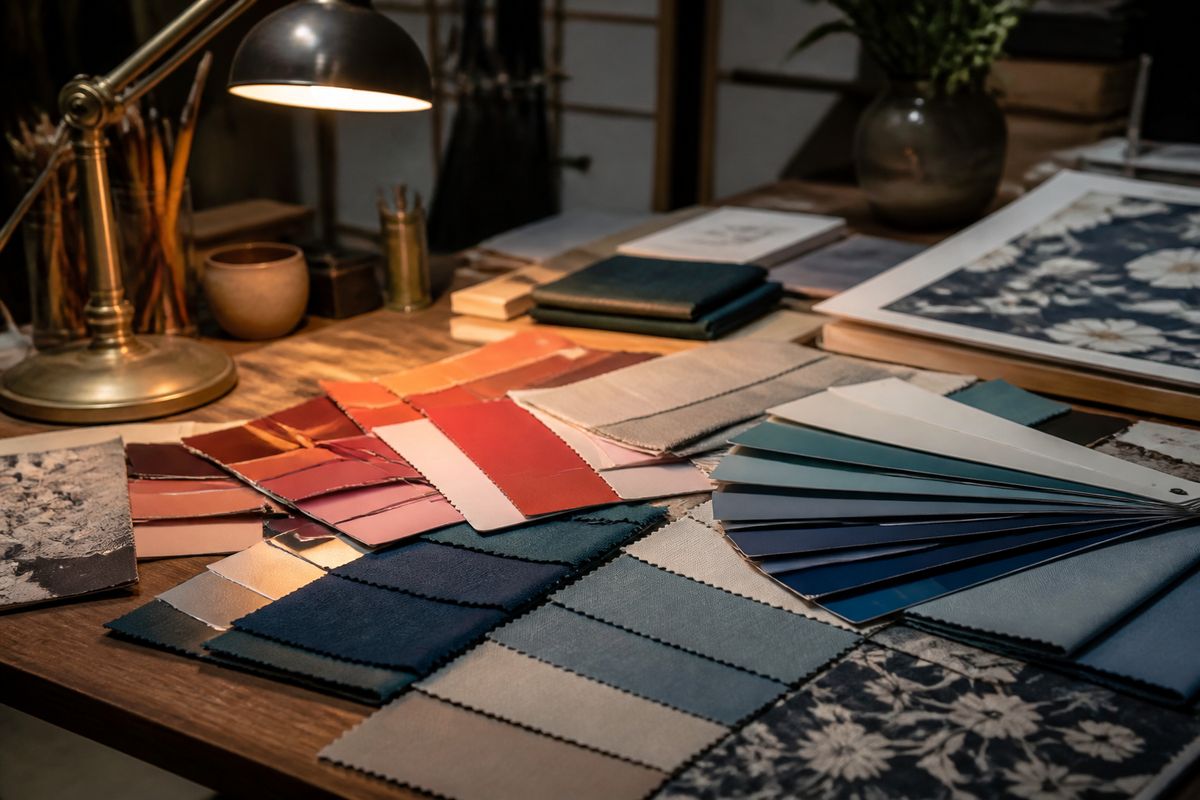
How to use color psychology to fuel your creative projects starts with one honest caveat: color doesn't have fixed, universal meanings that work the same way in every project. Research on color and psychological functioning shows that color's effects on mood and behavior are real but heavily dependent on context, culture, and what the viewer already associates with a given hue or brand. Used carefully, though, color choices are one of the fastest, cheapest ways to shape how a creative project feels and functions.
What Color Psychology Actually Explains
Color psychology studies how color perception connects to emotion, attention, and behavior. The strongest evidence comes from "color-in-context" research, which found that the same color can produce opposite effects depending on the situation. Red improved performance in competitive physical tasks but hurt performance on cognitive tests, where it increased caution and avoidance (Elliot & Maier, 2014). That's the opposite of a simple "red equals excitement" rule, and it's the reason color guides that promise one fixed emotional reaction per color oversell what the science supports.
Use the associations below as a starting point for brainstorming, not as a formula:
- Red: reads as urgent or attention-grabbing; in competence-based contexts (tests, portfolios, professional pitches) it can read as a warning rather than excitement.
- Blue: the most consistently "safe" choice across audiences; widely read as calm and trustworthy, which is why it dominates corporate and finance branding.
- Yellow: high visibility and energy, but loses legibility fast at low contrast and can feel cheap or anxious in large blocks.
- Green: reads as natural, healthy, or financial depending on shade and saturation; muted sage vs. neon lime send very different signals.
- Purple: associated with luxury and creativity in Western retail contexts, less consistent outside them.
- Black: signals premium/authoritative in small doses, heavy or somber in large ones.
- White: reads as clean and minimal in Western design contexts; in some East Asian cultural contexts it's associated with mourning rather than purity.
That last point matters more than most color guides admit: a cross-cultural study of implicit color associations found that red-green associations differed significantly between Western and Chinese participants, while red-white associations did not (Jonauskaite et al., 2023). If your project has an international audience, don't assume a color chart built for one culture travels intact to another. Check reference images or ask someone from that market before finalizing.
Applying Color to Branding
Brand color choice is a small number of decisions with outsized, long-lasting reach, since the palette shows up on everything from a logo to a checkout button. Work through these three questions before picking hexes:
- Who is the audience, specifically? Age, cultural background, and the category norms of your industry (finance skews blue, wellness skews green, kids' products skew saturated primaries) all shift how a color will land. Look at five direct competitors' palettes before you start.
- What does the brand actually do, not just say? A palette should match the product experience, not just an aspiration. A budgeting app promising "calm control of your money" earns more trust in blue-and-white than in high-saturation red.
- What single emotional association do you want to own? Pick one, not five. Coca-Cola's red works because it's used consistently across nearly a century of packaging, not because red is inherently more "exciting" than other colors.
A Practical Sequence for a Brand Palette
- Audit 5-8 competitors: note their primary and accent colors side by side. Look for the color nobody in your category is using; a gap is often a positioning opportunity.
- Build a palette of 1 primary + 1-2 secondary + 1 neutral: more than four colors in a working palette usually means the design will look uncertain rather than rich.
- Test at actual size: a swatch on a screen at full size looks different from a 16px favicon or a business card. Check both extremes before locking the palette.
- Get outside reactions: five people outside the project team, shown the palette for three seconds and asked "what's the first word that comes to mind," will surface problems faster than internal debate.
Applying Color to Design and UX
In interface and layout work, color has to do two jobs at once: carry emotional tone and stay legible. The second job has an actual measurable standard behind it. The W3C's accessibility guidelines require a contrast ratio of at least 4.5:1 between normal text and its background (3:1 for large text), based on research into what users with moderately low vision can comfortably read (WCAG 2.1 Success Criterion 1.4.3). That's not a suggestion for accessibility-focused projects only, it's the floor for any body text you expect people to actually read. Check your palette with a free contrast checker before you finalize it, not after.
Building a Mood Board That Uses Color Deliberately
- Pull 10-15 reference images built around the 2-3 emotions you want the finished piece to carry, not just images you find generically appealing.
- Group images by dominant hue and look for a pattern; if your "calm, trustworthy" references keep landing on warm oranges, your color plan and your reference taste are misaligned somewhere.
- Cut anything that only fits the mood on its own merits but clashes with the rest of the board. A board with 12 aligned images beats one with 20 mixed ones.
Applying Color to Interface Elements
- Primary actions: give the one button you most want clicked (buy, submit, continue) the highest-contrast, most saturated color on the page. If three buttons compete for that treatment, none of them wins.
- Navigation and links: keep link color consistent across the whole project; changing it screen to screen forces users to relearn what's clickable.
- Text hierarchy: vary shade and weight, not hue, between headings and body copy. Multiple competing hues in running text reads as noisy rather than organized.
Applying Color in Fine Art and Illustration
Outside of commercial design, color still functions as a communication tool, just with looser rules and more room for deliberate rule-breaking.
Using Warm and Cool Temperature Contrast
Warm colors (reds, oranges, warm yellows) tend to advance toward the viewer and read as energetic; cool colors (blues, greens, cool purples) recede and read as calmer. This is a compositional tool, not a law: a painting built entirely from cool colors with one small warm accent will pull the eye to that accent precisely because it breaks the pattern.
Using Complementary and Monochromatic Schemes
- Complementary pairs (opposite each other on the color wheel, like red/green or blue/orange) create the strongest visual tension and are useful when you want a focal point to feel unmissable.
- Monochromatic schemes (variations in lightness and saturation of a single hue) create cohesion and are more forgiving for beginners, since nothing can clash.
A Working Process for Color in a Piece
- Pick one dominant hue before you start, and decide what percentage of the piece it should occupy (a common starting ratio is roughly 60% dominant, 30% secondary, 10% accent).
- Block in values in grayscale first if the piece depends on contrast for its composition; color choices are easier to make once the light/dark structure already works.
- Get a second opinion before you call it finished: ask a peer or mentor whether the piece reads as the mood you intended, since your own eye adapts to a palette the longer you stare at it.
Where Cultural Context Changes the Rules
Color associations are partly learned, and what's learned differs by culture. White reads as purity and is worn at weddings across much of the Western world, but in several East Asian traditions it's associated with mourning. Red is tied to luck and celebration in Chinese culture, while in other contexts it functions mainly as a warning color. Treat any color chart as a starting hypothesis for your specific audience, not a universal key, and verify with references from that audience before you commit a final design.
FAQ
Does color psychology have real scientific support, or is it mostly marketing folklore?
Both. There's a genuine, peer-reviewed research base connecting color perception to attention and mood, but the effects are smaller, more context-dependent, and less consistent than most color-meaning infographics suggest. Treat published research as a guide for hypotheses to test, not a fixed rulebook.
What's the fastest way to test a color choice before committing to it?
Show the palette or mockup to 3-5 people outside the project for a few seconds and ask what word or feeling comes to mind first. If their answers cluster around what you intended, you're likely on track; if they scatter, the palette isn't communicating clearly yet.
How many colors should one project actually use?
For most branding and design work, one dominant color, one or two supporting colors, and a neutral is enough to stay coherent. Fine art has more room to break this, but even there, a limited palette usually reads as more intentional than an unlimited one.
Sources
- Elliot & Maier, "Color and psychological functioning: a review of theoretical and empirical work," Frontiers in Psychology (peer-reviewed, via PMC)
- Jonauskaite et al., "The good, the bad, and the red: implicit color-valence associations across cultures," Psychological Research (peer-reviewed, via PMC)
- W3C Web Accessibility Initiative, WCAG 2.1 Understanding Success Criterion 1.4.3 (Contrast Minimum)