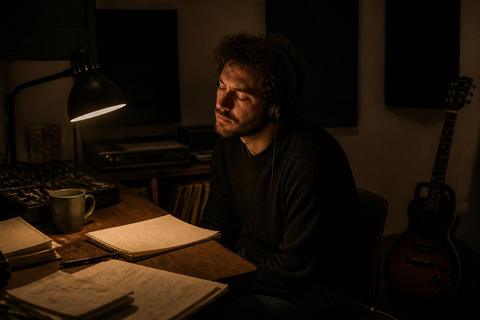
The Connection Between Meditation and Enhanced Creativity
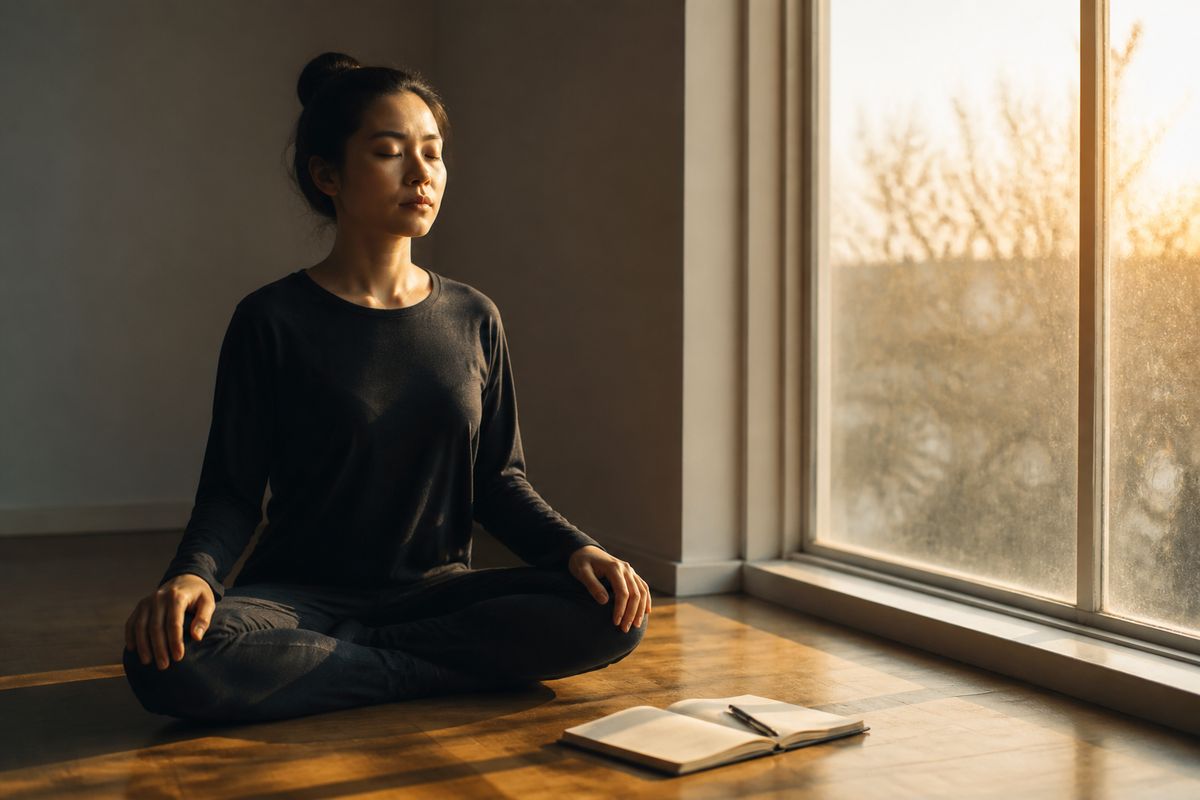
The connection between meditation and enhanced creativity is real, but it's narrower than most wellness blogs make it sound. Meditation doesn't hand you ideas out of thin air. What a regular practice does is change the mental conditions your brain works under – less reactive stress, fewer looping thoughts, more room to notice unusual associations – and those conditions are where creative thinking tends to happen.
What the research actually shows
The clearest evidence comes from a distinction between two styles of meditation, first tested by cognitive scientists Lorenza Colzato and Bernhard Hommel at Leiden University. Open-monitoring meditation – where you stay aware of whatever thoughts, sounds, or sensations arise without following any single one – was linked to better performance on divergent-thinking tasks, the kind that ask you to generate many possible answers (think: "list unusual uses for a brick"). Focused-attention meditation – concentrating on one object, like the breath – was linked instead to convergent thinking, where you narrow multiple options down to one correct answer.
A 2023 meta-analysis pooling this line of research found a real but modest effect: mindfulness practice improved divergent-thinking scores with an effect size of d = 0.25, and convergent-thinking scores even more, at d = 0.47 (Psychonomic Bulletin & Review, 2023). Translation: meditation nudges creative-thinking test scores up, it does not turn a non-creative person into a wildly original one, and it may actually help logical problem-solving more than free-associating.
So the honest framing is: meditation is a mood-and-attention tool that clears out some of the noise that gets in the way of creative thinking. It is not a metaphysical channel to inspiration, and it doesn't work identically for everyone – individual differences in the research are large.
Why the mental clutter matters
A lot of what blocks creative ideas isn't a lack of imagination, it's cognitive load: replaying a conversation, worrying about a deadline, mentally drafting an email. Meditation trains you to notice a thought, let it go, and return attention to the present. That's the same skill that, applied to problem-solving, keeps you from getting stuck rehearsing the first mediocre idea instead of generating a few more.
Chronic stress also narrows attention onto threats, which is useful for surviving danger and bad for lateral thinking. The National Center for Complementary and Integrative Health notes that mindfulness-based programs can meaningfully reduce psychological distress and are comparable to first-line treatments for anxiety in some trials, though NCCIH is also clear that a lot of the underlying research is preliminary and long-term effects beyond a couple of months are not well established (NCCIH). Less baseline stress leaves more working memory free for the kind of loose association creative work needs – but don't expect meditation alone to fix a genuinely overloaded schedule.
Meditation styles worth trying, and what each one is actually for
Open-monitoring / mindfulness meditation
Sit comfortably, close your eyes or soften your gaze, and let attention rest on whatever arises – sounds, body sensations, thoughts – without chasing any one of them. This is the style most tied to divergent thinking in the research above. Ten minutes is enough to start; there's no evidence that longer sessions produce proportionally bigger creativity gains.
Focused-attention meditation
Pick one anchor – usually the breath – and keep returning to it every time the mind wanders. This builds the concentration you need to actually finish a creative project once you have an idea, and the research above links it more to convergent thinking (narrowing options, editing, deciding) than to idea generation.
Walking or movement meditation
Slow, attention-on-the-body walking (or a Tai Chi or yoga sequence practiced mindfully) combines light physical activity with present-moment attention. It's a reasonable option on days when sitting still feels impossible, and physical movement has its own separate, well-documented mood benefits.
Mantra-based meditation (e.g., Transcendental Meditation)
Silently repeating a sound or phrase for about 20 minutes, twice a day, is the standard TM protocol. It functions similarly to focused-attention practice in terms of settling the mind; treat claims that it produces a uniquely different kind of insight with skepticism – the mechanism is the same attention-training principle as other styles.
How to actually build the habit
- Start at 5-10 minutes, same time each day. Right after waking or right before a work block you want to be sharp for are both good anchors. Consistency over weeks matters more than session length.
- Use a timer, not a clock-watch. Removing the temptation to check the time is a small thing that makes the practice easier to sustain.
- Sit before, not during, a creative task. Meditating and then immediately turning to a blank page or a problem you're stuck on gives the calmer, less cluttered attention state somewhere useful to go.
- Journal for 2-5 minutes right after. Write down anything that surfaced – a stray idea, an image, a half-formed connection. This is also where expressive-writing research is genuinely strong: James Pennebaker's decades of work at the University of Texas at Austin found that writing about a problem or experience for as little as 2-15 minutes, across just a few sessions, is associated with measurable reductions in stress, and that the benefit comes specifically from using causal and insight language ("because," "I realize," "this means") rather than just venting (American Psychological Association). Writing that works toward understanding, not just recording, is what moves the needle.
- Expect a plateau, not a lightning bolt. Most people notice calmer, less scattered attention within 2-4 weeks of daily practice before they notice any change in idea quality or quantity.
What meditation does not do
- It does not guarantee a specific idea, insight, or creative breakthrough on any given day.
- It is not a replacement for domain knowledge or practice – meditation clears mental space, it doesn't install skill or expertise.
- It does not work identically for everyone; the research shows real individual variation, and a portion of studies in this area are small or methodologically weak.
- It is not a substitute for treatment if stress or anxiety is severe or persistent – talk to a doctor or therapist in that case rather than relying on a meditation app alone.
FAQ
How long before I notice a creativity benefit from meditation?
Most people report calmer attention within a few weeks of daily practice. Measurable gains on divergent-thinking tasks in research studies typically follow structured programs lasting several weeks, not single sessions.
Is open-monitoring or focused-attention meditation better for creativity?
Open-monitoring is more consistently linked to divergent thinking (generating many ideas); focused-attention is linked more to convergent thinking (narrowing and refining). A mix of both, at different points in a project, matches how the creative process actually moves – ideas, then edits.
Do apps like Headspace or Calm work as well as an in-person class?
For general mindfulness and stress-reduction purposes, app-guided sessions are a reasonable starting point and are what most of the research on brief interventions actually uses. If anxiety or stress is significantly interfering with daily life, a class or a therapist trained in mindfulness-based approaches is a better fit than an app alone.
Can meditation replace brainstorming or other idea-generation techniques?
No. Meditation is best treated as a warm-up that reduces mental noise before a creative task, not a substitute for structured techniques like brainstorming, mind-mapping, or simply doing the research and drafting reps a project needs.
Sources
- Psychonomic Bulletin & Review (Springer/PMC), meta-analytical review of mindfulness and creativity
- National Center for Complementary and Integrative Health (NIH), Meditation and Mindfulness: Effectiveness and Safety
- American Psychological Association, Speaking of Psychology: Expressive Writing (Dr. James Pennebaker, UT Austin)