The Impact of Nature on Creativity: Exploring Outdoor Inspiration
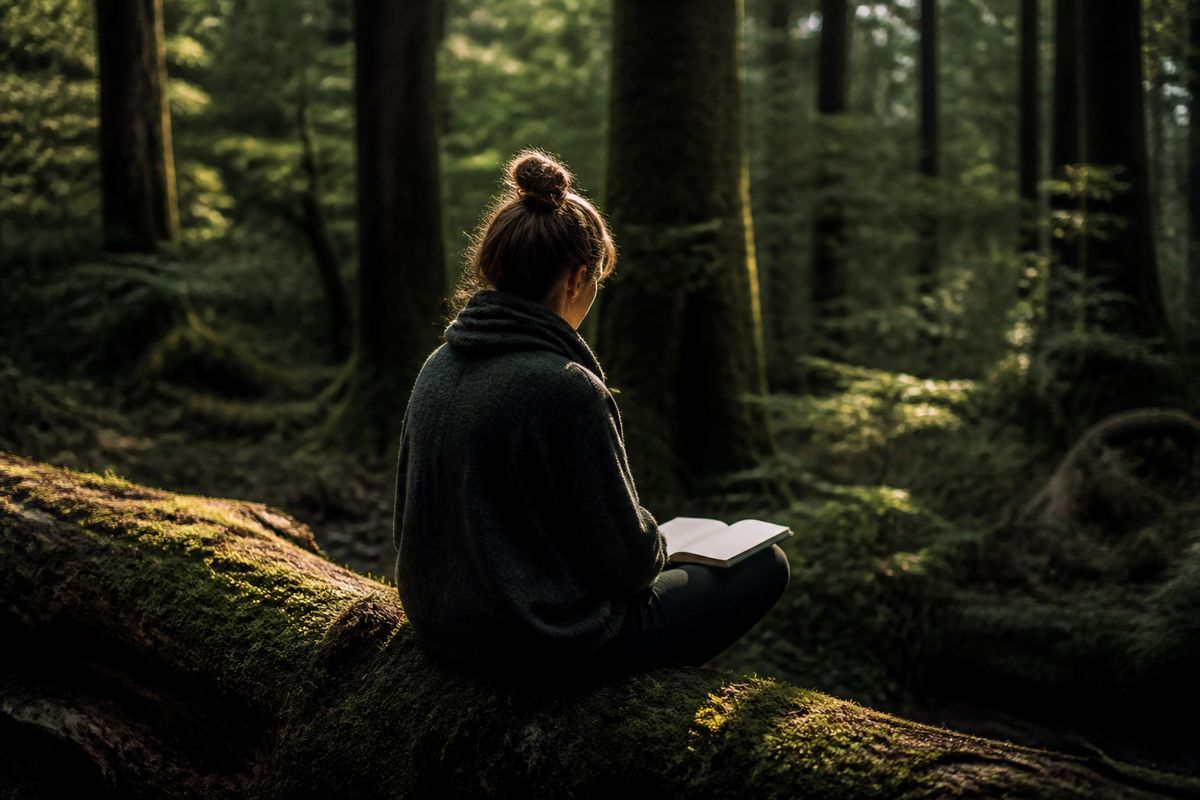
The impact of nature on creativity is one of the more measurable links in psychology: studies show time outdoors changes how the brain handles attention and idea generation, at least for a few hours. This isn't a mystical claim about "creative energy" from trees. It's a testable effect on working memory, mind-wandering, and problem-solving, and it shows up in controlled experiments, not just anecdotes from artists and writers.
What the research actually shows
The most-cited study here comes from psychologists at the University of Utah and University of Kansas, published in PLOS ONE in 2012. They tested backpackers on the Remote Associates Test (RAT), a standard measure of creative problem-solving, either before a four-to-six-day wilderness trip or on the trip's fourth day with no phones or screens allowed. The pre-trip group averaged 4.14 out of 10 correct; the four-days-in group averaged 6.08 out of 10, a jump the researchers described as roughly 50 percent (Strayer, Atchley & Atchley, 2012). Worth noting: the design couldn't fully separate "nature" from "days without a screen and a change of routine," so treat it as evidence for disconnection-plus-nature, not nature alone.
Separately, Stanford researchers Marily Oppezzo and Daniel Schwartz ran four experiments on walking and creative output. In one, participants walking on a treadmill facing a blank wall generated twice as many novel uses for an object as participants sitting down, meaning the act of walking mattered more than the scenery in that particular test (American Psychological Association summary of Oppezzo & Schwartz, 2014). Outdoor walking added a modest edge over treadmill walking in some conditions, but walking itself did most of the work.
The theoretical explanation researchers lean on is Attention Restoration Theory (ART), proposed by Rachel and Stephen Kaplan: directed attention (the kind you use fighting traffic or answering email) gets depleted with use, and environments with "soft fascination" (clouds, water, leaves moving) let that capacity recover without demanding focus. It's a reasonable framework, but a 2016 systematic review found the evidence base thinner than the theory's popularity suggests, with inconsistent attention measures across studies (Ohly et al., systematic review, European Centre for Environment and Human Health). Use ART as a working hypothesis for why nature helps, not a settled fact.
Where nature shows up in creative work
Art and writing
Painters and writers citing nature as a working input isn't new. Monet built a garden specifically to paint it. Thoreau and Emerson wrote about solitude outdoors as a condition for clearer thinking, not just a scenic backdrop. That's testimony, not data, but it lines up with the attention-restoration research: quiet, low-demand environments seem to free up the same cognitive bandwidth these writers described using.
Product design
Biomimicry, engineering solutions modeled on natural structures, is a concrete example of nature functioning as a direct problem-solving reference rather than a mood-setter. The best-known case is Velcro, which Swiss engineer George de Mestral developed after examining burrs stuck to his dog's fur and his own clothing under a microscope in the 1940s and 50s. That's a case of observation-driven design, not inspiration in the vague sense.
How to actually use this
None of this requires a wilderness trip. Here's what's supported by the research above, roughly ordered by effort:
1. Walk before you need ideas, not just when you're stuck
Based on the Stanford findings, a 15-20 minute walk before a brainstorming session or writing block is a better bet than pushing through at your desk. Indoor walking works if outdoor isn't available; the walking is the active ingredient, the scenery is a bonus.
2. Put your phone away, not just on silent
The Utah/Kansas study's participants had zero device access for days, which is unrealistic for daily life, but the direction is clear: uninterrupted stretches without notifications let attention reset in a way that a phone in your pocket doesn't. Try 30-60 minutes fully device-free outdoors before defaulting to a multi-day retreat.
3. Use "soft fascination," not intense stimulation
A busy street or a loud gym doesn't give the same restorative effect ART describes as a park, treeline, or body of water does. If you have a choice of outdoor spaces, pick the one with fewer things demanding your attention (traffic, crowds, decisions) rather than the most scenic one.
4. Keep a short observation log
Five minutes of writing down specific, concrete details you noticed outdoors (not feelings, but details: the exact shade of a leaf, a sound you couldn't place) trains the same close-observation habit that shows up in nature-based visual art and nature writing. This is a practice technique, not a research finding, but it's a low-cost way to make outdoor time do double duty.
5. Try a change of workspace before a bigger intervention
Working near a window with a view of greenery, or on a porch or balcony, is a smaller, more repeatable version of the same mechanism. It won't match a multi-day trip's effect size, but it costs nothing and can be done daily.
What this doesn't mean
Time outdoors is not a guaranteed creativity switch, and none of the cited studies claim it works for everyone or every kind of creative task. The Remote Associates Test measures a specific kind of convergent-then-divergent word association; it is not a proxy for "creativity" in the broad sense of writing a novel or designing a product. The walking studies measured "alternative uses" tasks in a lab, not real-world creative output over weeks or months. Use these findings as a reason to build short outdoor or walking breaks into a work routine, not as a promise that a park visit will solve a specific creative problem.
FAQ
How much time in nature is actually needed to see an effect?
The Utah/Kansas study measured effects after four to six days, which is the strongest data point for a large effect size. Shorter exposure (a 15-20 minute walk) shows measurable but smaller boosts in the Stanford research. There isn't strong data pinning down an exact minimum for a "creativity boost" from a single short outdoor break, so treat daily short walks as a maintenance habit rather than a guaranteed one-time fix.
Does it have to be true wilderness, or does a city park count?
The research doesn't require backcountry hiking. ART's mechanism (soft fascination, reduced directed-attention demand) applies to urban green space too, which is why city planners cite the same research when justifying parks and tree cover. A park with fewer traffic sounds and more greenery will likely outperform a busy plaza, but you don't need remote wilderness to get some benefit.
Does walking indoors work as well as walking outdoors?
In the Stanford experiments, indoor treadmill walking facing a blank wall produced a similar boost in novel idea generation as outdoor walking, suggesting the movement itself, not the scenery, drove most of the effect in that specific task. Outdoor settings may add benefits the lab studies weren't designed to capture, such as stress reduction, but don't assume indoor walking is worthless if outdoor access is limited.
Sources
- ScienceDaily summary of Atchley, Strayer & Atchley (2012), PLOS ONE, University of Utah / University of Kansas
- American Psychological Association press release on Oppezzo & Schwartz (2014), Journal of Experimental Psychology: Learning, Memory, and Cognition
- European Centre for Environment and Human Health (ECEHH), systematic review of Attention Restoration Theory