The Role of Playfulness in Boosting Creative Output
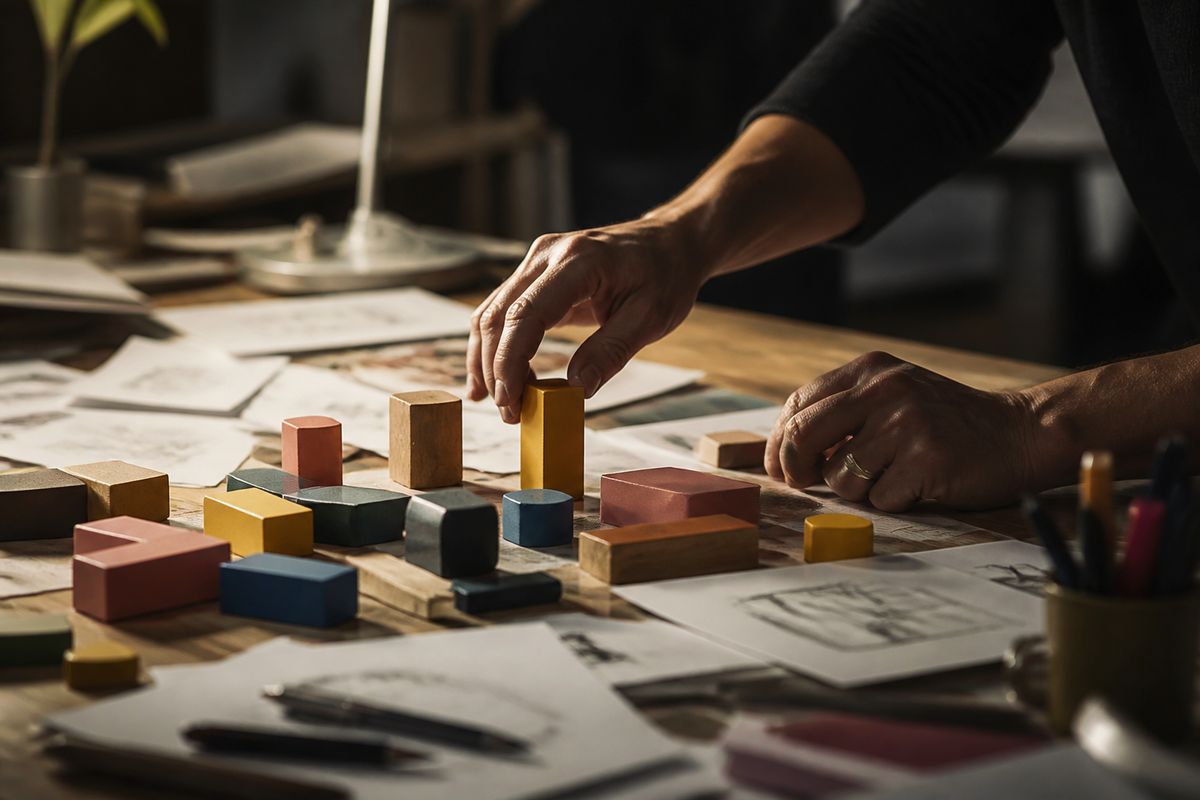
The role of playfulness in boosting creative output comes down to a few specific mental shifts: it lowers the cost of being wrong, it lets your attention move between ideas instead of locking onto the first one, and it keeps you working on a problem because you want to, not because someone is grading you. None of that is mystical. It is a set of conditions you can build into an afternoon, a meeting, or a sketchbook habit.
What "playfulness" actually means here
Playfulness is not the same as goofing off. Researchers describe it as a way of engaging with a task: exploring options, trying combinations that might fail, and treating the activity itself as worthwhile rather than judging it only by the outcome. That framing matters because it is the opposite of how most adults approach work tasks, where the outcome is judged and the process is just overhead.
Traits that show up in playful problem-solving
- Curiosity - asking "what happens if" before deciding whether the idea is good.
- Low attachment to the first answer - willingness to drop a promising idea and try a different angle.
- Tolerance for a messy middle - staying in the ambiguous, unfinished stage of a project without rushing to close it.
- Enjoyment of the process - getting something out of the act of making, not just the finished product.
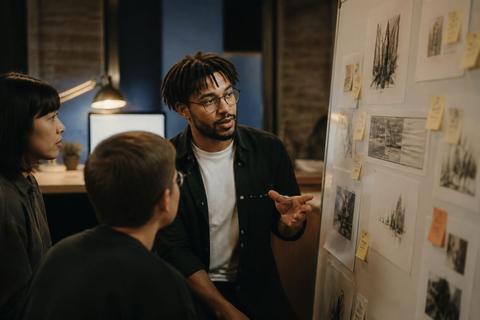
- Social ease - being willing to say a half-formed idea out loud in front of other people.
Why playfulness helps creative output, specifically
Three mechanisms show up consistently in the research, and they are worth naming individually because each one suggests a different fix.
Switching between ideas instead of freezing on one
Creative tasks usually reward being able to move between options - trying one approach, abandoning it, trying another - rather than grinding on a single idea. A study published in PLOS ONE measured how often people voluntarily switched between different uses of an object during a divergent-thinking task, and found that switching frequency predicted higher originality and fluency scores on separate creativity tests. The same study found the opposite pattern on convergent tasks (like solving an anagram), where sticking with one approach longer worked better. The practical takeaway: for open-ended creative work, force yourself to generate and drop options rather than defending your first idea; for narrow problems with one correct answer, that same switching habit can slow you down.
Lower stakes for being wrong
People generate more unconventional ideas when they are not worried about being embarrassed for a bad one. Google's internal Project Aristotle research, which studied over 180 of its own teams, found that psychological safety - team members' confidence that they will not be punished or humiliated for admitting a mistake or floating a rough idea - was the single strongest predictor of team effectiveness, ranked ahead of who was on the team. The re:Work research summary lists it first among the five factors Google identified. If you want more creative output from a team, or from yourself, the lever is reducing the penalty for a bad idea, not finding more talented people.
Working because it's interesting, not because it's scored
Creativity researcher Teresa Amabile's decades of work on the "intrinsic motivation principle" found that people produce their most creative work when they are driven mainly by interest and enjoyment in the task itself, and that heavy extrinsic pressure - competition, close evaluation, reward-for-output schemes - can measurably reduce creative output even when it increases speed or volume. That does not mean deadlines are bad. It means a task framed entirely around being judged tends to narrow thinking rather than open it up.
Where the stress-relief benefit fits in
Playfulness is not just a creativity trick, it is also a real coping mechanism. Adult-play researchers at Auckland University of Technology and the University of Auckland report that adults who build unstructured play into their week cope better with stress, experience more positive emotion day to day, and report higher life satisfaction, with benefits comparable to those documented in children's play research. A less stressed, less depleted brain has more room left over for the "what if" thinking creative work requires, so the stress-relief effect and the creativity effect reinforce each other rather than being two separate benefits.
Six ways to build playfulness into your work, this week
1. Set a 10-minute "bad idea" timer
Before starting a creative task, spend 10 minutes writing down deliberately bad, weird, or impossible ideas with no filtering. This removes the evaluation pressure up front so your first "real" attempt isn't also your only attempt.
2. Change one physical thing about your workspace
Move to a different room, rearrange your desk, or work standing up for an hour. Novel physical cues interrupt the autopilot mode that keeps you reaching for the same familiar solution.
3. Make something with no deliverable
Draw, doodle, freewrite, or noodle on an instrument for 15 minutes with no plan to use the result. Practicing the process without an evaluation attached is what rebuilds tolerance for unfinished, imperfect work.
4. Use a two-round brainstorm
Round one: generate as many ideas as possible, out loud or on paper, with a rule that no one, including you, critiques anything. Round two: go back and evaluate. Mixing generation and judgment in the same pass is what kills playful idea generation fastest.
5. Ask "what if" before "will this work"
When you hit a wall, ask a few "what if" questions first - what if this were twice as big, what if I removed the obvious solution, what if I had to explain it to a ten-year-old - before you evaluate feasibility. Feasibility questions are useful, but asked too early they shut down the idea pool.
6. Borrow someone else's brain for 20 minutes
Bring a half-formed idea to one other person and talk it through without a plan. Saying an unfinished idea out loud to someone who won't judge it is a low-cost way to practice the "safe to be wrong" condition described above, even without a whole team culture change.
What playfulness will not do
It will not replace domain knowledge, skill, or practice. A playful mindset helps you generate and stay with more options; it doesn't hand you expertise. It also doesn't work identically in every context: the PLOS ONE research above found that switching between options hurts performance on tightly defined problems with a single right answer, so applying "loosen up and try random things" to, say, a compliance checklist is the wrong tool for the job. Save it for genuinely open-ended, generative work.
FAQ
Is playfulness the same thing as creativity?
No. Playfulness is a way of approaching a task - low stakes, exploratory, enjoyment-driven. Creativity is the output. Playfulness is one of several conditions that make creative output more likely, alongside domain skill and enough time to iterate.
Can playfulness be built deliberately, or does it have to happen naturally?
It can be built deliberately. The structures above - timed brainstorms, no-deliverable making time, separating idea generation from evaluation - create the conditions for playfulness even for people who don't consider themselves naturally playful.
Does this work for solo creative work, or only teams?
Both, though the mechanism differs slightly. The psychological-safety research is about teams specifically, but the same principle applies solo: if you evaluate your own ideas too early or too harshly, you get the same narrowing effect. Give yourself the same "no punishment for a bad idea" permission you'd want from a teammate.