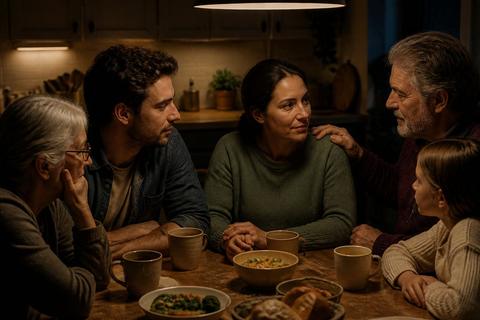
Exploring Cultural Heritage Through Family Stories
Exploring cultural heritage through family stories starts with a specific question, not a vague intention to "learn more about where you're from." The families who actually end up with something (a recorded interview, a written timeline, a box of labeled photos) are the ones who treat it like a small project with steps, not a someday activity. Here's what that looks like in practice, including where people usually get stuck.
Why family stories carry more than facts
A family story is rarely just an event report. It's the event plus what your grandmother decided mattered enough to keep repeating: which detail she emphasized, which parts she left out, the phrase she always used to end it. That editorial layer is itself information. It tells you what she was proud of, what she was still uneasy about, and what she wanted you to take from it. Historical records can confirm a date or a ship manifest; only the story tells you how it felt to live through it.
Start with people, not archives
Before you touch a genealogy website, talk to the people who are still alive to talk to. Records don't disappear, but people do, and the specific, first-person version of a story is not recoverable once the person who lived it is gone.
Prepare questions, but let the story wander
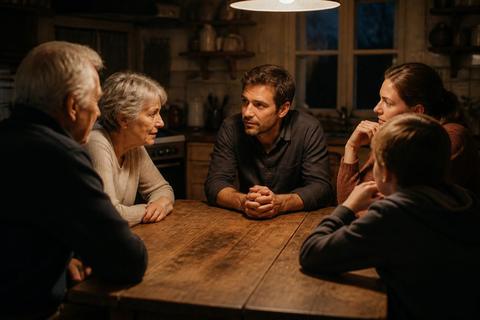
Go in with 8 to 10 open-ended questions written down (not a script you read verbatim): "What do you remember about the house you grew up in?" works better than "Where did you grow up?" because it invites a scene instead of a fact. The Smithsonian Center for Folklife and Cultural Heritage's interviewing guide recommends preparing an outline of topics in advance, then following the person's own thread once they land on a story they clearly want to tell, rather than steering them back to your list. Most people have one or two stories they've been waiting to tell for years. Let those happen; you can circle back to your other questions after.
Record it, don't rely on memory
A phone voice memo is enough. Ask permission first, state the date and the person's name at the start of the recording, and keep a written backup of names, places, and years mentioned, since audio is easy to mishear later. Do this even if you think you'll remember; specific phrasing and tone rarely survive being retold secondhand.
Bring an object or photo to the conversation
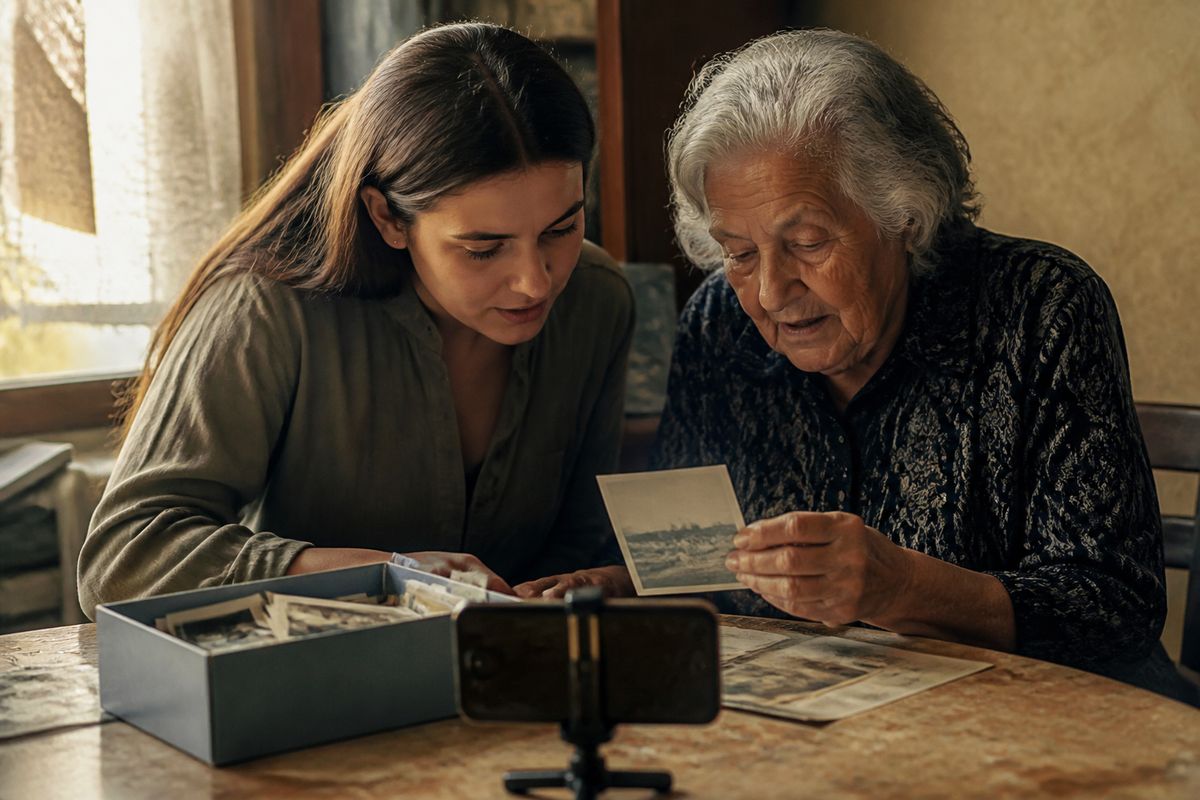
A photograph, a piece of jewelry, or an old letter pulls out details a direct question won't. People describe scenes when they're looking at something concrete instead of trying to summarize decades from memory.
Use records to fill the gaps stories leave
Stories tell you what mattered emotionally; records tell you when and where it happened, which lets you place the story in a specific, checkable context.
Start with the most recent generation you don't already know and work backward
The National Archives holds U.S. federal census schedules from 1790 through 1950, with the 1950 census the most recent release (census records are withheld from public access for 72 years by law, so 1960 becomes available in 2032). The Archives' own guidance is to begin with the most recent census you can access and work backward generation by generation, since each earlier census gives you the names, approximate ages, and household composition you need to search the next one back.
Know which record answers which question
Census records establish who lived where and with whom in a given year. Immigration and ship passenger arrival records (the National Archives' genealogy resources cover records for U.S. arrivals roughly 1820 to 1982) can confirm a port, a date, and sometimes a last residence abroad. Naturalization and military records fill in service history and citizenship dates. Don't expect one document type to answer everything; most family timelines are stitched from three or four different record types.
Write down what you find as you go
A simple spreadsheet with name, event, date, place, and source beats a folder of downloaded PDFs you'll forget the context of in six months. Note where each fact came from so you (or a relative later) can trace it back if two sources disagree.
Choose a format that matches how the story will actually get used
Different formats serve different purposes. Picking the wrong one is the most common reason family history projects stall halfway through.
Written narrative
Best when you want something a relative can read start to finish, or print for a milestone birthday or funeral program. Takes the longest to produce because it requires actual writing, not just collecting.
Recorded oral history
Best for preserving a specific person's voice, phrasing, and manner of telling, especially for older relatives where time matters. Fastest to capture, but needs to be transcribed or at least indexed by topic and timestamp, or it becomes an unlistened-to file within a year.
Photo and document archive
Best as the backbone the other two formats draw from. Label every photo you scan with names, approximate year, and location while someone who still remembers is available to tell you; unlabeled photos lose most of their value within a generation.
What sharing these stories is realistically good for
Family history projects sometimes get pitched as a health intervention, and that overstates it. What has actual research behind it is narrower and still worthwhile: a systematic review and meta-analysis published in Frontiers in Psychiatry found that reminiscence-based activities (structured recall and sharing of personal life stories) produced a medium-to-large reduction in depressive symptoms and a small-to-medium improvement in life satisfaction among older adults without cognitive impairment, with group formats and programs lasting more than 8 weeks showing the strongest results. That's a real, measured effect on mood and life satisfaction for the person telling the story, not evidence that storytelling changes anyone's external circumstances. Treat the conversation as valuable in itself for the person sharing it and for what your family record gains, not as therapy or a cure for anything.
Handling the parts of a family story that are hard
Not every story is a warm one. Migration, war, poverty, and loss show up in most family histories somewhere. When a relative brings up something painful, don't redirect away from it to keep the mood light; let them decide how much to share, ask if they want to keep going, and don't press for detail they're visibly not offering. If a story surfaces trauma that's clearly still raw, that's a conversation for a relative and, if needed, a mental health professional, not a prompt to keep digging for your family tree.
FAQ
What if the oldest relatives in my family are already gone?
Interview the next generation down; they often remember more of the original stories, secondhand, than you'd expect, plus their own memories of the person you wanted to ask about. Combine that with whatever records exist (census, immigration, obituaries, church records) to reconstruct as much of the timeline as you can.
Do I need special equipment to record an interview?
No. A smartphone voice memo app is sufficient for most home interviews. Prioritize a quiet room and a device with a full charge over any special microphone.
How do I get a reluctant relative to open up?
Don't lead with a recorder and a question list. Start by looking at photos together with no agenda, and let recording become a natural next step once they're already telling stories. Some people never warm to being formally interviewed, and that's fine; casual notes taken after an ordinary conversation still count as documentation.
Sources
- Smithsonian Center for Folklife and Cultural Heritage - Oral History Interviewing Guide
- National Archives - Census Records
- National Archives - Resources for Genealogists and Family Historians
- Frontiers in Psychiatry - Effects of reminiscence therapy on psychological outcome among older adults without obvious cognitive impairment: a systematic review and meta-analysis