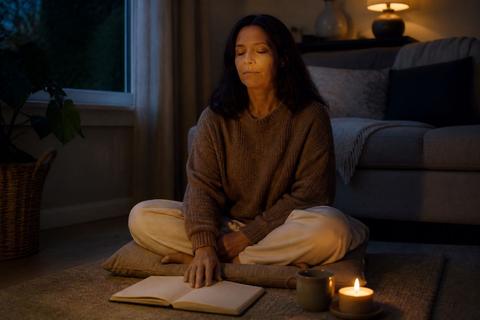
Evening Rituals for Better Sleep and Relaxation
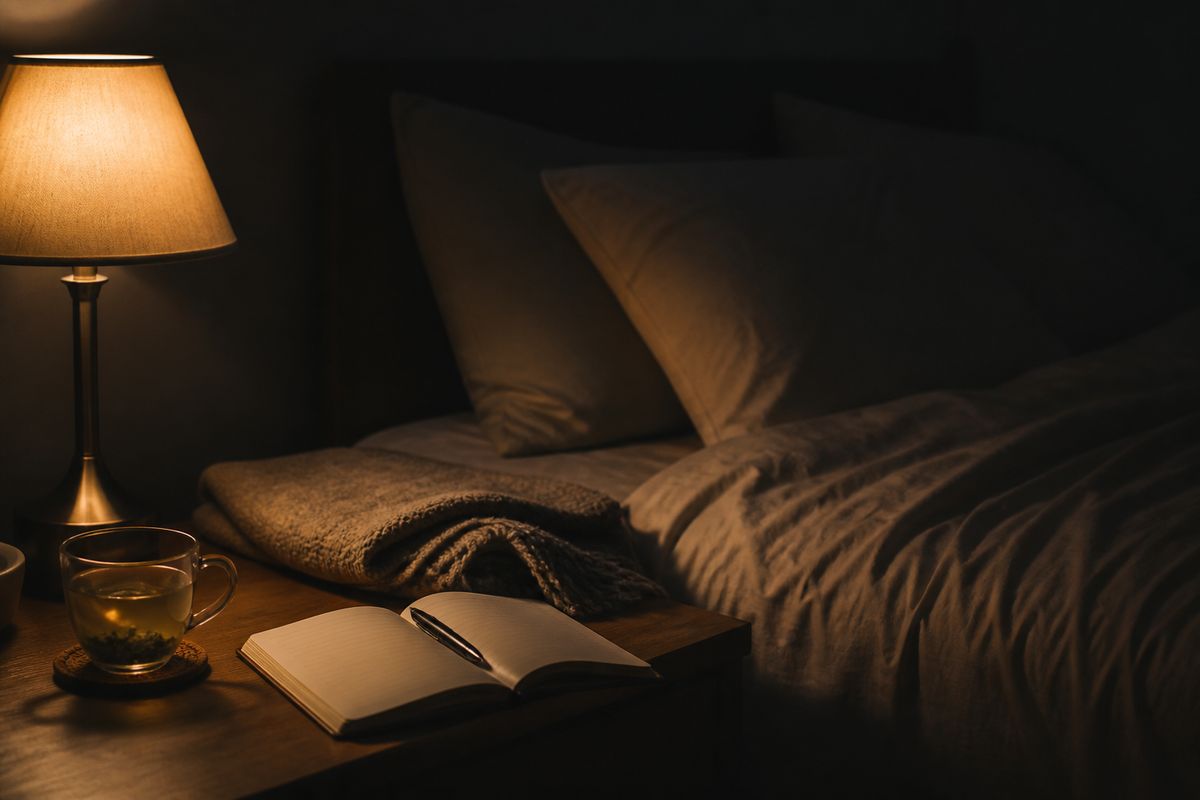
Evening rituals for better sleep and relaxation work by giving your nervous system a repeatable, low-stimulation signal that the day is over. None of this is magic: a wind-down routine doesn't force sleep to happen, it removes the things that keep your brain in "alert" mode (bright light, screens, stress, an empty stomach or a full one) so falling asleep gets easier. Here's what actually has evidence behind it, and what to skip.
Why a wind-down routine helps
Sleep isn't a switch you flip, it's a gradual drop in alertness driven by two things: your circadian clock (light-driven) and your body's core temperature curve. A consistent routine works with both:
- Consistent timing anchors your circadian rhythm, so your body starts releasing melatonin around the same time each night.
- Lower light and less screen use stop blocking that melatonin release. The Sleep Foundation notes that blue light suppresses the body's release of melatonin, which is helpful in daylight but works against you at night.
- Lower stress and a quieter mind reduce the mental chatter that delays sleep onset (called "sleep latency").
None of these tools "manifest" sleep or force your body to comply. They remove friction. If you have chronic insomnia, sleep apnea symptoms (loud snoring, gasping), or pain that keeps you up, talk to a doctor, a routine is a support tool, not a treatment for a sleep disorder.
Set up the environment first
Clear the visible clutter
Spend five minutes putting things away, dishes off the nightstand, clothes off the floor. This isn't about aesthetics, it's about removing visual reminders of unfinished tasks right before you're trying to disengage from tasks.
Dim the lights starting 1-2 hours before bed
Swap overhead lights for a lamp, and avoid bright bathroom lighting during your bedtime routine. This is the single highest-leverage change here, since light is the primary input your circadian clock uses to time melatonin release.
Handle noise deliberately
If you're in a noisy building or have a partner on a different schedule, a white noise machine, a fan, or earplugs are a legitimate fix, not a crutch. Consistent background noise is easier for your brain to tune out than intermittent noise (a car alarm, a neighbor's TV).
Cut off stimulants and screens on a schedule
Set a caffeine cutoff by early-to-mid afternoon
Caffeine's half-life is roughly 4-6 hours in most adults, meaning half of what you drank at 3 p.m. is still active in your system at 8-9 p.m. The Sleep Foundation recommends a cutoff of at least eight hours before bedtime as a general guideline; if you're sensitive to caffeine or have trouble falling asleep, move your last cup earlier, or cut it earlier in the day entirely.
Don't count on alcohol as a sleep aid
A drink or two can make you feel drowsy at first, but alcohol fragments sleep later in the night and cuts into REM sleep, which is why you can sleep seven hours after drinking and still wake up tired.
Put screens away 30-60 minutes before bed
Phones, tablets, and TVs emit blue-enriched light at close range, and the content itself (news, social media, work email) is often what's actually keeping you wired, not just the light. If you want to keep a screen habit, switch to audio: a podcast or audiobook with the screen off and the room dim.
Mind-calming practices with real evidence behind them
Journaling, 10 minutes, focused on gratitude
A short gratitude-journaling habit is one of the better-studied pre-sleep practices. A 2009 study in the Journal of Psychosomatic Research found that gratitude predicted better subjective sleep quality, longer sleep duration, and less time spent falling asleep, an effect explained by fewer negative thoughts and more positive ones right before bed. In practice: write down three specific things that went well that day (not vague ones, "the coffee my coworker brought me" beats "I'm grateful for my job"). If worry is what's keeping you up, write those down too, then close the notebook. The point is to get the thought out of your head and onto paper, not to solve it at 11 p.m.
Slow breathing or a short body scan
Five to ten minutes of slow, extended exhales (for example, inhale for 4 counts, exhale for 6-8) shifts your nervous system toward the parasympathetic ("rest and digest") state. A body scan, mentally noticing tension from your feet up to your head without trying to fix it, does something similar by giving your attention a slow, boring task instead of replaying the day.
Progressive muscle relaxation (PMR)
Tense each muscle group for about 5 seconds, then release and notice the contrast, starting at your feet and working up to your face. It takes 10-15 minutes and is one of the more mechanical, repeatable relaxation techniques, useful if meditation-style "just relax" instructions don't do anything for you.
Use body temperature to your advantage
A warm bath or shower, timed right
Timing matters more than people expect. A meta-analysis out of the University of Texas at Austin found that bathing in water around 104-109°F, roughly 1-2 hours before bedtime, helped people fall asleep about 10 minutes faster on average. The mechanism: warm water pulls blood toward your skin, and when you get out, your core temperature drops faster than it would have on its own, mimicking the natural temperature dip that precedes sleep. A bath right at bedtime, or a very hot one, can leave you overheated instead of relaxed, so build in that hour-plus buffer.
Light stretching, not a workout
A few slow stretches, child's pose, legs up the wall, gentle neck rolls, can release physical tension from sitting or standing all day. Keep the effort low. A vigorous workout raises heart rate and core temperature in the wrong direction for sleep and is better done earlier in the day.
Eat and drink with sleep in mind
A heavy, rich, or spicy meal within an hour or two of bed can cause reflux or indigestion that disrupts sleep. If you're genuinely hungry close to bedtime, a small snack (a banana, a handful of almonds, a bit of yogurt) is unlikely to cause problems. Chamomile and other herbal teas are a fine part of a calming routine, mostly because of the ritual and the warmth, the evidence for chamomile itself producing a strong sedative effect in humans is thin, so treat it as a pleasant habit rather than a remedy.
Put it together: a sample 45-minute routine
- 60-90 minutes before bed: finish eating, take a warm bath or shower, dim the lights.
- 30 minutes before bed: phone away or on do-not-disturb, light stretching for 5 minutes.
- 15-20 minutes before bed: journal for 10 minutes (three good things, plus anything on your mind), then 5-10 minutes of slow breathing or PMR in bed.
- Same time every night, including weekends, so your circadian rhythm has a stable anchor.
You don't need all of these every night. Pick two or three, run them consistently for two to three weeks, and keep the ones that actually change how fast you fall asleep or how rested you feel. Consistency matters more than any single technique.
FAQ
How long before I notice a difference?
Give a new routine at least 1-2 weeks of consistent use before judging it. Sleep habits respond to repetition, not a single good night.
What if I still can't fall asleep after 20-30 minutes?
Get up, do something quiet and dim (reading, not your phone), and go back to bed when you feel drowsy. Lying awake frustrated trains your brain to associate the bed with wakefulness.
Do I need to do the full routine every single night?
No. The consistent bedtime and the light/screen cutoff matter most. Journaling, baths, and stretching are add-ons you can rotate based on time and energy.