
Family Bonding Through Shared Rituals
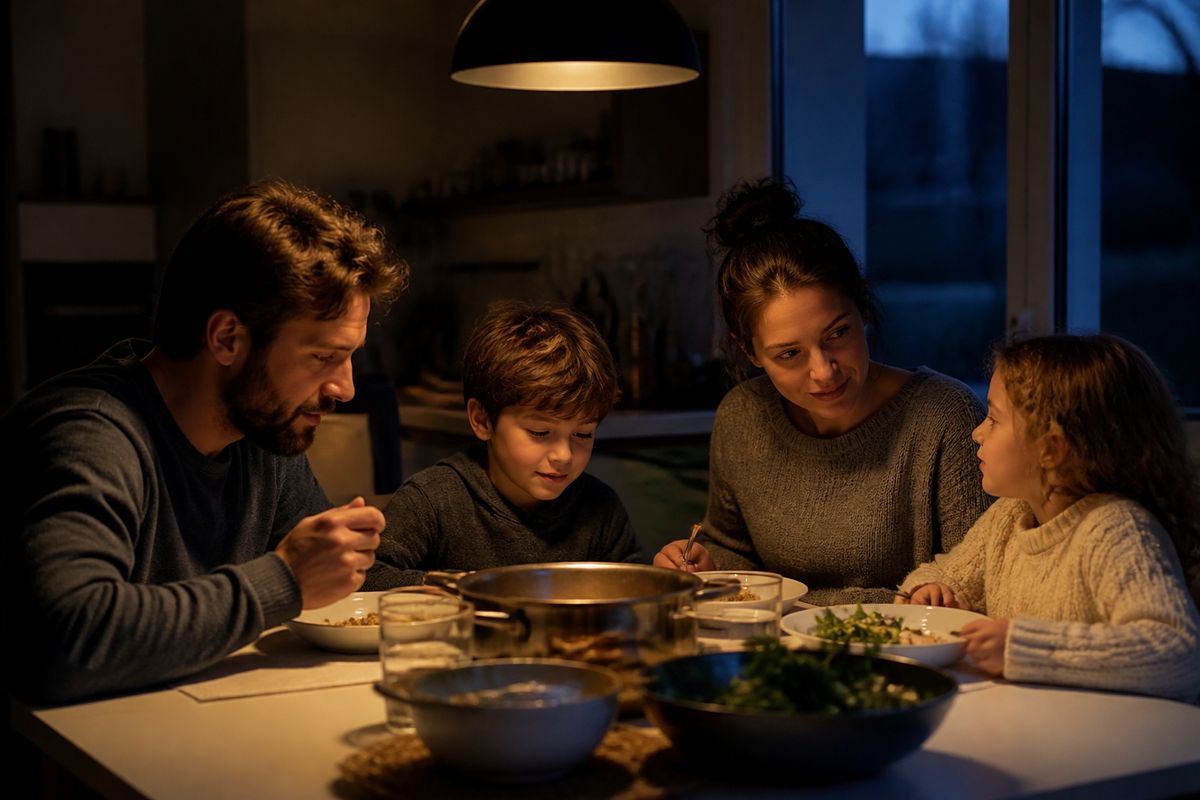
Family bonding through shared rituals works because repetition, not intensity, is what builds trust and closeness between people. A ritual is just an activity your family repeats on purpose, with enough consistency that everyone knows it's coming: the same seat at dinner, the same Friday movie, the same three questions at bedtime. That predictability is the mechanism. Kids especially read repeated, low-drama routines as a signal that the household is stable, and that signal is what makes the bonding happen, not the specific activity you choose.
What counts as a family ritual (and what doesn't)
A ritual is different from a rule or a chore. Brushing teeth is a routine; turning it into "who can make the silliest face in the mirror before bed" is a ritual, because it adds a shared, repeatable moment of connection on top of a task that would happen anyway. The three ingredients that make something a ritual rather than just an errand:
- It repeats on a known cadence - daily, weekly, or tied to a specific date, not "whenever we feel like it."
- Everyone has a role - even a two-year-old can be "the one who picks the song," which is enough to make it their ritual too.
- It survives a bad day - a real ritual is short and low-effort enough that you still do a stripped-down version of it when someone's tired or the day went sideways.
Why the predictability matters more than the activity
Research on family bedtime routines found a dose-response pattern: children whose families used a bedtime routine every night had sleep-problem rates around half those of children with no routine at all (23.3% vs. 47.2% in infants and toddlers; 14.9% vs. 38.5% in preschoolers), and the benefit scaled with how many nights per week the routine happened - more consistent nights, better sleep and daytime behavior (Mindell & Williamson, 2015). That's the pattern that shows up across most family-ritual research: it's the reliability of the repeated cue, not the content of the activity, that produces the calming, bonding effect.
Daily rituals: the highest-leverage tier
Daily rituals do the most work per minute invested because they're the ones kids can actually predict. Two are worth prioritizing if you're starting from nothing.
A shared meal, most days of the week
A large systematic review of family mealtime research found that eating together more often is linked to modest but real protective effects: children who shared at least 3 meals a week with family were about 12% less likely to be overweight than those who shared fewer, and adolescents sharing 5 or more meals a week showed about 35% lower odds of disordered eating compared with less-frequent family meals (Dallacker et al., 2023). Worth being honest about the limits here: most of the underlying studies are correlational, and when researchers control for other family and income factors, the size of the effect shrinks. A well-controlled U.S. study using child fixed-effects models found the meal-frequency link to academic and behavior scores mostly disappeared once family-level differences were accounted for (Miller et al., 2012). The honest takeaway: family meals are a reasonable, low-cost ritual to build around, but treat them as one supportive habit among several, not a guaranteed fix for a struggling teen.
Practical version: aim for 15-20 minutes, phones in another room, one rotating question ("best and worst part of today" works for any age). You don't need a home-cooked meal - takeout eaten together at the table counts.
A short bedtime routine
Keep it to 10-15 minutes and the same three steps every night: bath or wash-up, one story or a few minutes of quiet talk, lights out at a fixed time. The research above suggests the routine matters more than any single step in it, so if a night is chaotic, cut it down to the shortest version rather than skipping it.
Weekly rituals: reconnecting on a schedule
- Family game night or movie night - pick one recurring night so it doesn't compete for calendar space with everything else. Rotate who chooses.
- An outdoor block - a Saturday-morning walk, bike ride, or park trip. The physical activity is a bonus; the point is unstructured time without a screen in the loop.
Seasonal and annual rituals
These carry the most emotional weight precisely because they're rare: holiday traditions, birthday customs, an annual trip or even an annual "state of the family" dinner where everyone says what they want to do differently next year. They don't need to be expensive. A specific, repeated small gesture (the same pancake shape every birthday morning, the same ornament-hanging order every December) reads as more meaningful to kids than a bigger one-off gift, because it's the one that comes back.
How to start (without overhauling your whole week)
1. Pick one ritual, not five
Trying to install a daily meal, a weekly game night, and a new bedtime routine all in the same month usually collapses under its own weight. Choose the one that fits your current schedule and commit to it for a month before adding another.
2. Give every family member an actual job
A ritual where only one parent does the planning and everyone else just shows up tends to fade. Even a small, concrete role - picking the music, setting the table, choosing next week's game - gives kids ownership, which is what keeps them engaged past the first few weeks.
3. Build in a "minimum viable version"
Decide in advance what the stripped-down version looks like for a bad night: a 5-minute version of the bedtime routine, a meal that's just everyone sitting at the table for 10 minutes even if dinner is cereal. Rituals that only work at full strength break the first time life gets in the way.
4. Revisit every few months
What works for a 6-year-old stops working for a 13-year-old. Ask directly: is this still something people want to do, or is it running on habit alone? Swap or retire rituals that have turned into obligations - a ritual kept alive out of guilt stops doing the bonding work it's meant to do.
Common obstacles and honest workarounds
- "We don't have time." Most effective rituals are under 20 minutes. The barrier is usually scheduling, not duration - block the time on a shared calendar like any other commitment.
- A teenager checks out. This is normal and not a sign the ritual failed. Shrink the ask (they don't have to talk, just be at the table) and let them have input on format - teens often re-engage with rituals they helped redesign.
- A move, divorce, or new schedule disrupts everything. Rebuild the smallest version of the ritual first (even one shared meal a week) rather than trying to restore the old routine wholesale across two households.
FAQ
How many family rituals should we actually have?
There's no fixed number. A household that reliably does one daily ritual (a meal or a bedtime routine) plus one weekly ritual (game night, a walk) has enough structure for most of the documented benefits. More isn't necessarily better if it means each one gets rushed.
Do family rituals really improve behavior or academics, or is that overstated?
Be skeptical of strong causal claims. There are real, replicated associations between things like consistent bedtime routines and better child sleep and behavior regulation, and between family meal frequency and lower rates of disordered eating and overweight in some studies. But well-controlled research shows some popular claims (especially about grades) shrink or disappear once you control for other family factors. Treat rituals as one supportive piece of a stable household, not a guaranteed intervention.
What if my kids say the ritual is boring?
Ask what they'd change before dropping it. Often the format has gone stale, not the underlying idea of a shared time - swapping the game, the question, or the day can revive it without losing the routine itself.
Can shared rituals help after a major family change, like a divorce?
Yes, and this is where predictability matters most - kids in transition benefit from knowing exactly what stays the same. Start with the smallest possible version in each household rather than trying to preserve every old tradition unchanged.
Sources
- Mindell & Williamson, "Bedtime Routines for Young Children: A Dose-Dependent Association with Sleep Outcomes" (NIH/PMC)
- Dallacker et al., systematic umbrella review, "Family Mealtimes: A Systematic Umbrella Review of Characteristics, Correlates, Outcomes and Interventions" (NIH/PMC)
- Miller et al., "Family Meals and Child Academic and Behavioral Outcomes" (NIH/PMC)