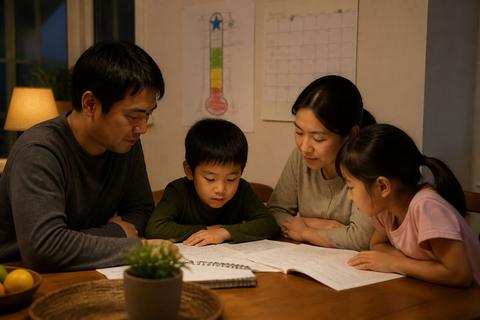
How to Encourage Individuality Within the Family Dynamic

Encouraging individuality within the family dynamic means helping each person develop their own opinions, interests, and sense of self while staying connected to everyone else. Family therapists describe this balance as “differentiation of self”: the capacity to think and choose for yourself without cutting off from the people you love or fusing your identity to theirs. Families that manage this tend to have less chronic tension and more resilient relationships; families that pressure everyone to think and want the same things tend to produce either quiet compliance or open rebellion, neither of which holds up over time.
What "individuality" actually means in a family
Individuality isn't about being contrarian or putting your own wants ahead of the household. It's the ability to hold a different opinion, like a different subject in school, or choose a different path than a parent expected, while still showing up for family dinner and caring what happens to everyone else. Research on Bowen family systems theory describes a well-differentiated person as able to "stay calm and clear headed enough in the face of conflict, criticism, and rejection to distinguish thinking rooted in a careful assessment of the facts from thinking clouded by emotionality." The same body of research links low differentiation (families where everyone's mood and identity are tangled together) to more chronic anxiety and a heavier share of relationship problems.
In practice, that means the goal isn't maximum independence for its own sake. It's a household where disagreement doesn't threaten the relationship, and where "you're wrong for wanting that" isn't the default response to a kid or a spouse choosing something different.
Why it's worth the effort
- Fewer power struggles. When people don't have to fight to be heard, they stop escalating just to get noticed.
- More honest communication. Someone who's been shut down for having a different opinion learns to hide their real thoughts, which erodes trust over time.
- Better decision-making later in life. Kids who get practice making age-appropriate choices at home carry that skill into adulthood instead of outsourcing every decision to someone else.
- Less resentment between siblings. When each child is seen for who they are instead of measured against a sibling, comparison-driven conflict tends to drop.
Concrete ways to encourage it
1. Let disagreement happen without a "winner"
When a family member says something you don't agree with, resist the urge to correct it on the spot. Ask one follow-up question before responding ("What makes you see it that way?") instead of leading with your counterargument. This single habit does more than any generic "be a good listener" advice: it signals that a different opinion is safe to say out loud in this house.
2. Give real, age-appropriate choices, not fake ones
Autonomy support isn't letting a 7-year-old skip school; it's giving them control over things that are genuinely theirs to control: what to wear, which after-school activity to try this term, how to organize their own desk. Research on parental autonomy support and self-determination theory finds that this style of parenting, explaining the reasoning behind rules instead of just imposing them, and offering real choices where the stakes allow it, is associated with greater self-regulation, motivation, and psychological well-being in children, compared with a more controlling style. A workable rule of thumb: for decisions with low real-world risk (clothing, hobbies, room decor, weekend activities), let the person choose even if you'd choose differently. For decisions with real safety or financial stakes, the parent still decides, but explains why.
3. Stop comparing siblings out loud
"Why can't you be more like your sister" is one of the most reliable ways to damage both kids in that sentence. Research on parental differential treatment between siblings finds that inequity in treatment, whether intentional or not, has been linked to increased depressive symptoms, more risk-taking behavior, and less positive sibling relationships over time. That doesn't mean every child needs identical treatment; a 6-year-old and a 16-year-old have different needs. But the treatment should be explainable by something other than "I like this one's personality better." If you're praising one child's grades, look for something specific and true to praise in the other rather than a vague consolation compliment.
4. Build one small ritual around each person's actual interests
General "family time" tends to default to whoever's interests are loudest. Instead, try one recurring activity explicitly built around each person: 20 minutes of one-on-one time doing what that person picks, once a week, rotating through family members. It doesn't need to be elaborate: a walk, a game they choose, five minutes of a video they want to show you. The point is that the choice of activity is theirs, consistently, not just on birthdays.
5. Hold short family meetings with a real agenda
A 15 to 20 minute weekly check-in where each person gets uninterrupted time to raise something (a chore complaint, a scheduling conflict, an idea for the weekend) teaches that a differing view has a legitimate place to go besides an argument in the kitchen. Keep it short, and end with at least one concrete decision, even a small one, so it doesn't turn into a venting session with no outcome.
6. Let physical space reflect the person
A bedroom, a shelf, or even a corner of a shared space that a person can arrange to their own taste (posters, color, organization system) gives individuality somewhere to live physically, not just in conversation. This matters especially for kids and teenagers who have little control over the rest of the house.
7. Model it yourself
Kids learn what individuality within connection looks like by watching their parents do it, not by being lectured about it. Let your family see you hold an opinion your spouse disagrees with, or pursue a hobby that isn't shared by everyone in the house, without it becoming a conflict. If the only individuality modeled in the home is the parents', it's a rule for adults, not a family value.
Where this goes wrong
Individuality does not mean no shared rules. A household without consistent expectations isn't fostering independence, it's under-parented, and kids in that environment often become more anxious, not less, because there's no stable structure to test themselves against.
It does not mean every opinion carries equal weight on every decision. A teenager's opinion about curfew deserves a real hearing; it doesn't mean the teenager sets the curfew. Autonomy support is about explaining and including, not abdicating.
It is not a same-week fix for sibling rivalry or a defiant teenager. These patterns build up over months or years and take consistent, unglamorous repetition to shift. A single "special day" or one good conversation won't undo a long pattern of comparison or control.
Common questions
How do I encourage individuality without the house feeling chaotic?
Keep the non-negotiables few and clear (safety, basic respect, core household responsibilities), and put everything else, hobbies, opinions, style, how someone spends their free time, in the category where individuality is welcome. Chaos in a household usually comes from unclear expectations, not from too much individuality.
What if a family member's individuality actively clashes with family values?
Separate values from preferences. A different taste in music, career, or hobby is a preference. Real value conflicts (honesty, treatment of others, safety) still get addressed directly: encouraging individuality isn't the same as accepting harmful behavior without comment.
Does encouraging individuality make kids more selfish?
The research points the other way: differentiation of self is specifically about holding your own identity while staying connected to others, not withdrawing from them. Kids who get to be themselves at home tend to have less to prove and less need to compete for attention, which in practice usually shows up as more cooperation, not less.
How long does it take to see a difference?
Small changes (a kid volunteering an opinion at dinner, less friction over clothing choices) often show up within a few weeks of consistent practice. Deeper patterns, like long-standing sibling comparison or a teenager who's stopped sharing anything real, usually take a few months of consistent follow-through before trust rebuilds.