How to Use Art Journaling for Creative Expression
How to use art journaling for creative expression comes down to one habit: combining images and words on the same page without worrying about whether either one looks “good.” Art journaling mixes drawing, collage, paint, and short bursts of writing in a single notebook, and it works because it lowers the bar for entry compared to a sketchbook or a diary. You don't need drawing skill and you don't need full sentences. You need a page, something to mark it with, and a few minutes.
What Art Journaling Actually Is
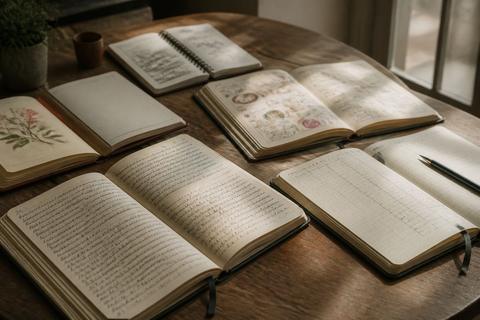
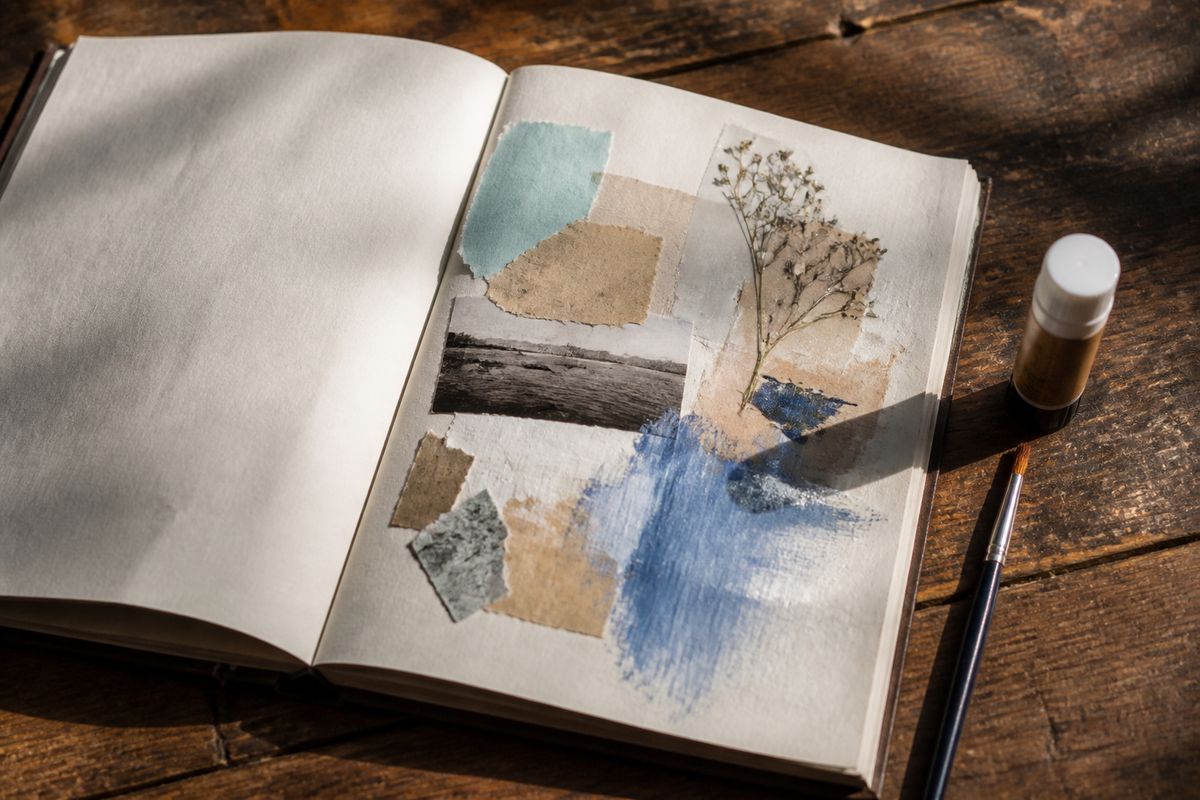
An art journal is a mixed-media notebook where the point is the process, not a finished piece worth framing. A single spread might have a paragraph of handwriting, a magazine cutout, three unrelated doodles, and a smear of paint you dragged your finger through. Nothing on the page has to connect to anything else. That's different from a sketchbook (which is usually about improving drawing) or a bullet journal (which is usually about organizing tasks). Art journaling sits closer to a visual diary: you're recording a mental or emotional state, not producing a finished artwork.
Why It Works: The Actual Evidence
Two separate bodies of research back the two halves of art journaling.
The Writing Half
Psychologist James Pennebaker's expressive-writing studies, which started in the 1980s, found that writing about an emotional experience for as little as 15-20 minutes changes how that experience is organized in the brain, and Pennebaker has described the practice as one “anybody can use” alongside, not instead of, therapy (American Psychological Association). The mechanism isn't magic: turning a vague, looping worry into specific words forces you to organize it, which is why people report feeling calmer afterward even when nothing about the situation has changed.
The Art-Making Half
A 2016 Drexel University study measured cortisol (a stress hormone) before and after 45 minutes of art-making and found levels dropped in most participants, regardless of prior artistic experience or skill (Drexel University). You do not need to be “good at art” for the stress-reducing part to apply; the study's whole point was that skill level didn't predict the effect.
Put those two findings together and art journaling is essentially expressive writing plus low-stakes art-making on the same page. It's a mood and stress-regulation tool, not a way to manifest outcomes or bypass professional mental health care. If you're dealing with a diagnosed anxiety or mood disorder, use it alongside treatment, not as a replacement for it.
What You Need to Start
The Journal
Pick a book with paper heavy enough to survive what you plan to do to it. If you'll use watercolor or wet media, get at least 90 lb (190 gsm) mixed-media paper; regular notebook paper will buckle and bleed through. If you're mostly writing and using dry media (pencil, marker), any bound notebook works. Spiral-bound journals lie flat for collage work; hardback sketchbooks travel better.
Supplies (Start With Five, Not Fifty)
- A pen or fine-liner for the writing sections. Pick one that won't smear under paint.
- A basic set of watercolors or an acrylic paint pad (a 12-color student set is enough).
- A glue stick for collage. Glue sticks dry flatter than liquid glue and won't warp the page.
- Old magazines, junk mail, or printed photos for cutting up. You're looking for source material, not quality paper.
- A black marker for outlining or covering mistakes. In art journaling, a marked-over “mistake” is just the next layer.
A Fixed Spot, Not a Studio
You don't need a dedicated room. A cleared corner of a table with a folder for your loose supplies is enough, as long as it's the same spot each time. The friction that kills a new habit is usually setup time, not lack of space.
A First Session: Step by Step
- Set a 15-minute timer. That's roughly the length used in the expressive-writing studies, and it's short enough that you won't talk yourself out of starting.
- Write first, for 3-5 minutes, without editing. Answer one prompt: “What's actually on my mind right now?” Don't reread it as you go. Misspellings and bad grammar are fine; that's the point of the exercise, not a flaw in it.
- Pick one color and cover part of the page with it. Paint, marker, whatever you have. You're not illustrating the words; you're giving your hands something to do that isn't typing or scrolling.
- Add one torn or cut image or word from a magazine if you have one nearby. If not, skip this step. It's optional on day one.
- Stop when the timer goes off, even mid-stroke. Finishing the page is not the goal; showing up for 15 minutes is.
Five Techniques to Rotate Through
1. Timed Free Writing
Set a timer for 3-5 minutes and write without lifting your pen, even if you're just writing “I don't know what to write” on repeat. This is the entry point for most sessions because it clears the immediate mental noise before you touch paint or scissors.
2. Collage Without a Plan
Flip through a magazine for two minutes, tearing out anything that catches your eye: a color, a word, a face, a texture. Don't look for meaning yet. Glue three to five pieces onto the page in whatever arrangement feels right. The “why” you picked them often becomes obvious after the fact, not before.
3. One-Color Layering
Choose a single color and use only it for the session: different tools (marker, paint, pencil) but one hue. Constraint removes the “which color goes where” decision that stalls a lot of beginners.
4. Single-Word Prompts
Write one word at the top of the page, something like “tired,” “Tuesday,” or “enough,” and spend 10 minutes responding to it in image and text, in any order. Concrete, ordinary words tend to produce more honest pages than abstract ones like “dreams” or “destiny.”
5. Scribble-to-Shape
Scribble a random loose line across the page with your eyes open but not thinking about it, then look for a shape inside the scribble and develop it with a marker or paint. This is a warm-up exercise borrowed from basic drawing instruction. It works because you're reacting to marks you already made instead of facing a blank page.
Keeping the Habit Going
Protect the Time Slot, Not the Output
Three 15-minute sessions a week for a month will teach you more about the practice than one heroic two-hour session. Put it on the same days each week if you can. Habit research consistently shows that a fixed cue (same day, same time, same chair) beats motivation for keeping a new practice alive past the first few weeks.
Let Pages Be Bad
Some pages will look like nothing. That's a normal rate of output, not a sign you're doing it wrong: the Drexel study's whole finding was that the stress-reduction effect didn't depend on the art being good.
Reread Occasionally, Don't Curate
Flip back through old pages every few weeks instead of judging each one right after you make it. Patterns (recurring colors, repeated words, a subject you keep circling back to) are usually easier to spot after a month than after a single session.
Decide Before You Start Whether You'll Share It
If you think you might post a page online, you'll unconsciously edit yourself as you make it. It's fine to share afterward, but decide that after the session, not during it. Knowing it's private while you're making it is what lets the free-writing and collage steps stay honest.
FAQ
Do I need to be able to draw?
No. Collage, single-color fields, torn paper, and handwriting all count as much as illustration. The Drexel cortisol study found no meaningful difference in outcomes based on prior art experience.
How long before I notice anything?
Individual sessions can lower stress in the short term the same day; the expressive-writing research on mood and health benefits generally used sessions repeated over 3-4 consecutive days, not a single sitting, so give it at least a week of regular short sessions before judging whether it's helping.
What if I don't know what to write or draw?
Use one of the five techniques above instead of a blank page. A scribble-to-shape warm-up or a single-word prompt removes the decision paralysis that usually causes people to quit in the first week.
Is this a substitute for therapy?
No. It's a self-directed mood and stress-processing tool. If you're managing an anxiety disorder, depression, or trauma, use art journaling alongside professional care, not in place of it.