Intergenerational Wisdom: Learning from Family History
Intergenerational wisdom, in plain terms, is what you can actually use from the people who came before you: how your grandfather rebuilt his finances after a layoff, why your grandmother refused to talk about the crossing, which family arguments repeat every generation until someone names them. Learning from family history works when you treat it as a research project with steps, not a vague appreciation for "where you come from." Here's what that looks like, including where it gets uncomfortable.
What you're actually looking for
Family history splits into two different kinds of material, and confusing them is why a lot of family history projects stall. One kind is factual: dates, addresses, occupations, immigration years. Records answer this. The other kind is interpretive: what a decision cost someone, what a person was proud of or ashamed of, which lesson they wanted passed down. Only a living voice gives you that second kind, and it disappears permanently when the person does.
- Identity context: knowing the specific pressures an ancestor faced (a war, a bankruptcy, a forced move) gives you a reason for family patterns that otherwise look arbitrary.
- Decision-making precedent: how relatives handled a job loss, a health scare, or a move gives you a comparison case, not a rulebook.
- Coping examples: specific stories of what someone did under pressure are more useful than the generic idea that "the family is resilient."
- Practices worth keeping: recipes, holiday rituals, and language carry real information about daily life, not just sentiment.
Research backs the identity and coping pieces specifically. Psychologists Robyn Fivush and Marshall Duke at Emory University found that children who knew more concrete details about their family's history (where grandparents grew up, how parents met, family setbacks and how they were handled) showed better self-esteem, higher social competence, and less anxiety, and coped better after a stressful, shared event. As Fivush put it, describing families who talked about hard events "in more coherent and emotionally open ways," those children "coped better over the two-year period" than kids from families that avoided or flattened the harder stories.1 The mechanism isn't mystical: knowing a coherent, honest version of your family's harder chapters seems to give kids a working model for handling their own.
Start with people while you still can
Records don't expire. People do. Do the interviews first, then fill gaps with paperwork.
Ask specific questions, not broad ones
"What do you remember about the kitchen in that house" gets a real answer. "What was your childhood like" gets a shrug. Write down 8 to 10 questions ahead of time, but don't read them like a script; when someone lands on a story they clearly want to tell, let them finish it before you move to the next question.
Record it
A phone voice memo is enough. State the date and the speaker's name at the start, and keep a written note of names and places mentioned, since audio is easy to mishear months later. Do this even for people you talk to often. The specific phrasing rarely survives being retold secondhand.
Bring a photo or object
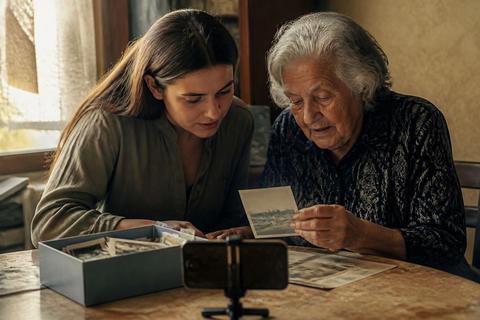
A photograph or a piece of jewelry pulls out detail that a direct question won't. People narrate a scene when they're looking at something concrete instead of trying to summarize forty years from memory.
Use records to check and fill in what stories leave out
Stories tell you what mattered emotionally. Records tell you when and where it happened, so you can place a story in a checkable context.
Work backward from what you already know
The National Archives identifies census, military, immigration, naturalization, and land records as the record types most commonly used by genealogists, and each earlier census gives you the names and approximate ages you need to search the one before it.
Know which record answers which question
Census records establish who lived where and with whom in a given year. Military service and pension records can add rank, unit, and dates of service dating back to 1775. Don't expect a single document to confirm a whole story; most family timelines come from three or four different record types stitched together.
Log your sources as you go
A simple spreadsheet (name, event, date, place, source) beats a folder of downloaded files you'll lose track of in six months. If two records disagree, you want to know where each one came from.
Turning family history into something you actually use
This is where a lot of family-history content overpromises. Learning your family's story doesn't change your circumstances by itself. What it can realistically do is change how you interpret and process your own situation.
Use it as a comparison case, not a script
If a grandparent rebuilt their finances after a specific setback, the useful part isn't "do what they did." It's seeing a concrete example of a plan that worked under real constraints, which can loosen the sense that your current problem is unprecedented or unsolvable.
Write about the harder parts, deliberately
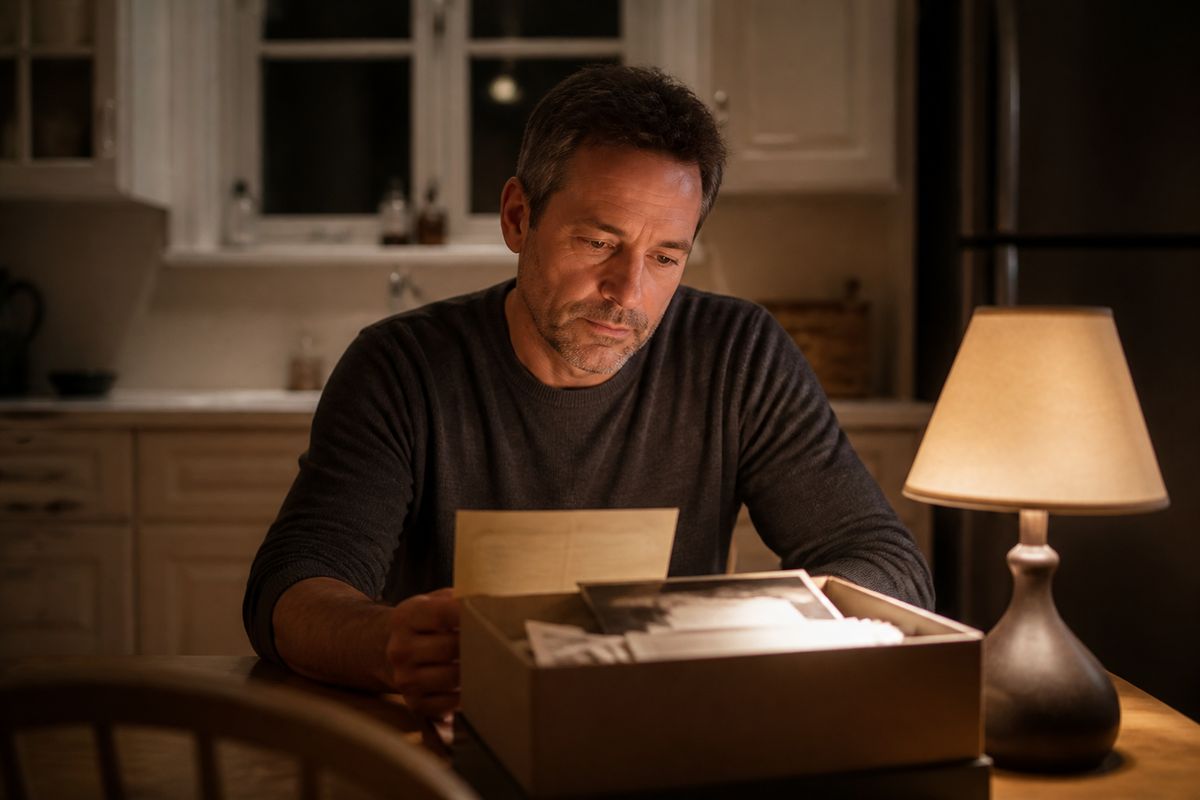
When a family story involves loss, conflict, or something still raw, putting it into words on paper (not just talking about it) has measurable value. In controlled studies of expressive writing, people who wrote about emotionally difficult experiences for a short series of sessions showed better psychological and physical health outcomes afterward than people who wrote about neutral topics.2 Set a timer for 15 to 20 minutes, write without editing, and don't show it to anyone unless you choose to. The point is processing, not producing a polished family memoir.
Pair it with a regular gratitude practice, if it fits
Separate from the family-history piece specifically, keeping a brief weekly log of what you're grateful for has its own research base: in Robert Emmons' controlled comparisons, people who kept gratitude journals weekly reported fewer physical symptoms, felt better about their lives overall, and were more optimistic about the coming week than people who logged hassles or neutral events.3 If a family story surfaces something you're thankful an ancestor did, that's a natural, specific entry, not a vague "grateful for family" line.
Preserving it so it doesn't disappear again
Pick a format that matches how it'll get used
A written narrative is best for something a relative reads start to finish or prints for a milestone. A recorded interview preserves an actual voice and is fastest to capture, but needs to be indexed by topic or it becomes a file nobody opens again. A labeled photo archive is the backbone the other two draw from; label names, year, and place while someone who remembers is still around to tell you.
Don't over-rely on social platforms
A private shared album or a simple document works better as a long-term archive than a social media post, which is easy to lose to platform changes, algorithm shifts, or an account going inactive.
Handling the parts that are hard
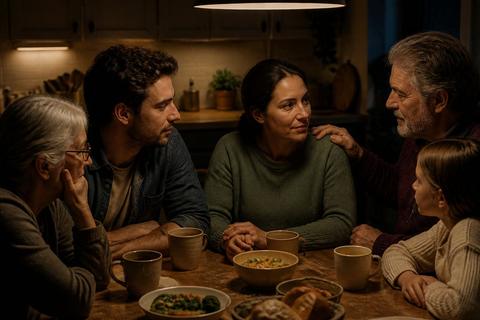
Not every family story is a warm one. Migration, addiction, financial ruin, and estrangement show up in most family histories somewhere. When a relative brings up something painful, don't redirect to keep the conversation light. Let them decide how much to share, ask if they want to keep going, and don't press for detail they're visibly withholding. If a story surfaces something clearly still raw for you or them, that's a conversation for a relative and, if needed, a therapist, not a prompt to keep digging for the sake of a family tree.
FAQ
What if the oldest relatives in my family are already gone?
Interview the next generation down. They often remember more of the original stories, secondhand, than you'd expect, along with their own memories of the person you wanted to ask about. Combine that with census, immigration, and obituary records to reconstruct what you can.
Do I need special equipment to record an interview?
No. A smartphone voice memo app is sufficient for most home interviews. A quiet room and a charged device matter more than any microphone.
Does knowing my family history guarantee better mental health or resilience?
No. The research shows an association between knowing coherent family narratives and better coping and self-esteem in children, and separate research shows expressive writing and gratitude journaling have measurable psychological benefits. None of this is a guarantee for any individual, and it isn't a substitute for professional support if you're dealing with a mental health condition.
How do I get a reluctant relative to open up?
Don't lead with a recorder and a question list. Look through old photos together with no agenda first, and let recording become a natural next step once they're already telling stories. Some people never warm to being formally interviewed, and that's fine; notes taken after an ordinary conversation still count.