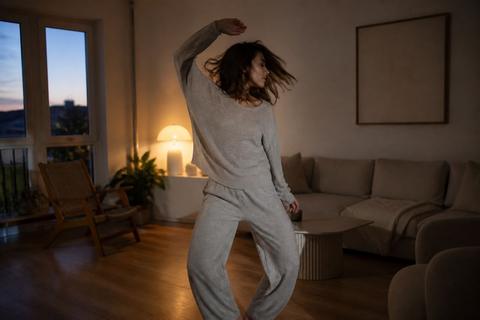
Nourishing Rituals for Mind, Body, and Spirit
Nourishing rituals for mind, body, and spirit are small, repeatable practices, a few minutes of breathing, a short walk, a written gratitude list, that you do on purpose instead of by accident. None of them will rearrange your circumstances or manifest a specific outcome. What they do is change your attention, your stress response, and your mood over time, and there's real research behind several of them. Here's what's worth doing, how to do it correctly, and what it actually delivers.
Nourishing the mind
Diaphragmatic (belly) breathing
This is breathing low into your belly instead of shallow into your chest, and it's one of the few relaxation techniques with a clear physiological mechanism: slowing your breath rate stimulates the vagus nerve and shifts you toward parasympathetic (rest-and-digest) activity.
- Sit or lie down somewhere quiet. One hand on your chest, one on your belly.
- Inhale through your nose for about 4 seconds, feeling the hand on your belly rise while the hand on your chest stays mostly still.
- Exhale slowly through pursed lips for about 6-8 seconds. The exhale should be longer than the inhale.
- Repeat for 5-10 minutes, aiming for a slow, even rhythm rather than forcing a specific count.
An 8-week randomized study of healthy adults found that a program of diaphragmatic breathing sessions produced a measurable drop in salivary cortisol and negative affect scores, with no change in a control group over the same period. That study used 20 sessions over 8 weeks, so a single five-minute session won't replicate the effect, consistency over weeks is what the research actually measured. Five to ten minutes daily is a reasonable target if you want the same kind of benefit.
Meditation
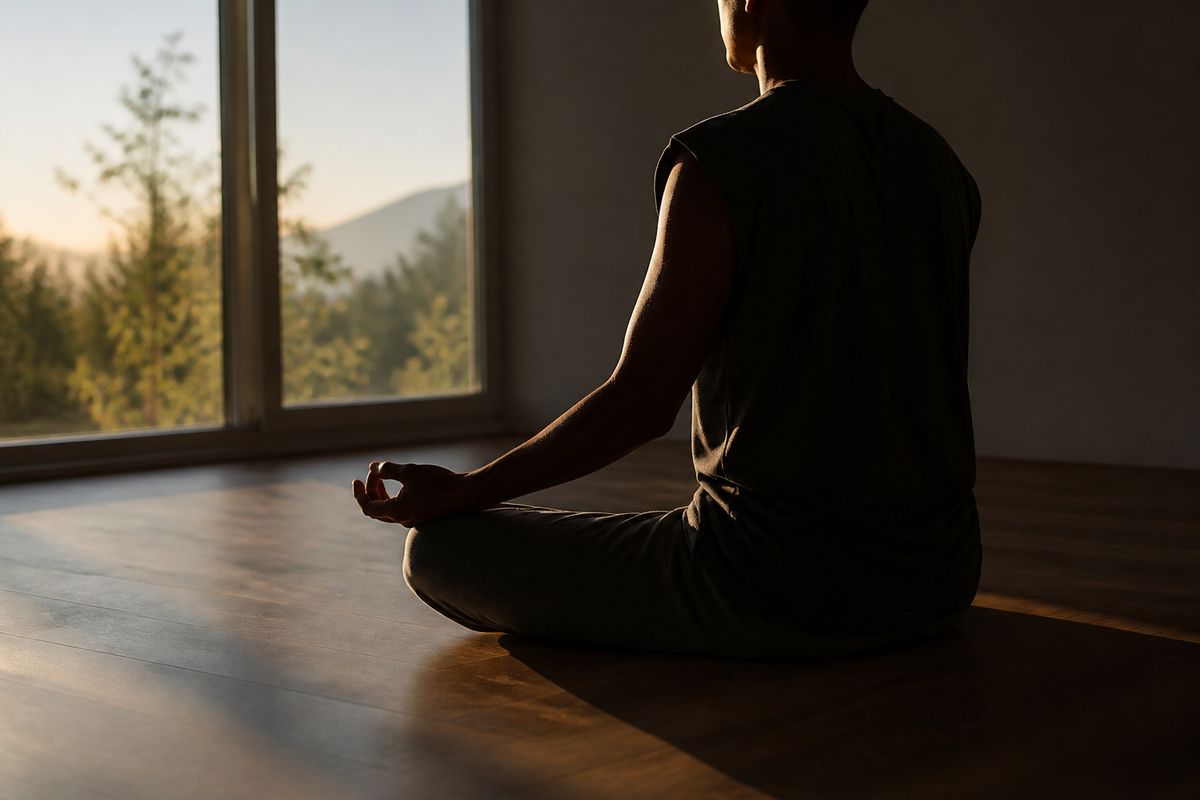
Meditation here means sitting still and repeatedly returning your attention to one anchor, usually the breath, and noticing when it wanders instead of trying to force a blank mind.
- Sit upright, cross-legged or in a chair with feet flat on the floor.
- Pick one anchor, the sensation of breathing, is the simplest for beginners.
- Set a timer for 5-10 minutes so you're not checking the clock.
- When your mind wanders, notice it and return to the anchor, without treating the wandering as failure. Wandering and returning is the actual exercise, not an interruption of it.
Consistency matters more than session length. Ten minutes daily for a month will do more for attention and emotional regulation than one 45-minute session followed by two weeks off.
Nourishing the body
Eating for steadier energy, not perfection
You don't need a strict diet plan for this to matter. Aim for something at each meal from three categories: a protein or legume, a vegetable or fruit, and a whole grain or other complex carbohydrate (brown rice, oats, whole-grain bread). This combination slows digestion and tends to produce steadier energy and mood than a meal that's mostly refined carbohydrate. Healthy fats, olive oil, nuts, seeds, avocado, support this same steadiness.
Hydration, with a number attached
A commonly cited target is about 11-15 cups (roughly 2.7-3.7 liters) of total fluids a day for adults, most of it from water and food, though actual needs vary with body size, activity, and climate. You don't need to hit an exact number to notice a difference: mild dehydration alone is enough to worsen fatigue and concentration for a lot of people. A simple check: if your urine is pale yellow, you're in a reasonable range; if it's dark, drink more.
- Keep a filled water bottle where you'll actually see it, on your desk, not in a bag.
- Add fruit or mint if plain water is the reason you're not drinking it.
- Drink a glass before coffee, not after, since caffeine has a mild diuretic effect.
Movement: yoga and walking
Yoga pairs slow movement with breath control, which is partly why it shows some of the same stress-reduction effects as breathing practice alone. If you're new to it, 10-15 minutes of basic poses (downward dog, child's pose, cat-cow) with slow, even breathing is a reasonable starting point; there's no need to build up to advanced sequences for the mind-body benefit.
Walking outdoors deserves a specific callout because it's been studied directly. A Stanford study published in the Proceedings of the National Academy of Sciences put healthy adults through a 90-minute walk, one group in a natural, tree-and-grass setting, the other along a busy urban roadway, and found that self-reported rumination decreased and activity dropped in a brain region linked to rumination only in the group that walked in nature; the urban walkers showed neither change. The study was small (38 participants) and doesn't mean every walk needs to be 90 minutes to help, but it's a real, specific result: the setting of the walk, not just the exercise, appears to matter for this effect. If you can choose between a park and a parking lot, the research favors the park.
Nourishing the spirit
Creative expression and journaling
Creative work, drawing, music, writing, doesn't need to produce anything good to be useful; the value here is expression, not output. Journaling specifically has real research behind it. Psychologist James Pennebaker's original studies had participants write about a difficult or emotional experience for 15-20 minutes on 3-4 consecutive days; people who did this visited student health services at roughly half the rate of a control group in the following months. The mechanism, per Pennebaker, isn't venting for its own sake, it's putting a messy experience into words with some cause-and-effect structure, which appears to change how the brain organizes the memory. If you try this, write freely for 15 minutes about something that's actually bothering you, don't worry about grammar, and don't reread it as a performance piece.
Gratitude practice
Write down three specific things you're grateful for, a couple of times a week rather than forcing it daily; research on gratitude journaling has found that overly frequent repetition can dull the emotional effect (a phenomenon called hedonic adaptation). Specificity matters more than volume: "grateful my neighbor helped me carry groceries in the rain on Tuesday" produces a stronger effect than "grateful for my neighbors" as a category. This is a mood and outlook practice, not a mechanism for getting things; treat the requests-to-the-universe framing as marketing, not mechanism.
Spiritual or reflective reading and community
If spirituality or religious practice is part of your life, reading texts that resonate with you or attending a group with shared values can support a sense of belonging that a purely solo practice doesn't. This is a preference and meaning-making layer, not something with a specific research literature the way breathing or journaling has, so treat it as personally valuable rather than clinically proven.
Building a routine that actually sticks
- Anchor it to an existing habit. Attach the new ritual to something you already do daily (after brushing your teeth, before your morning coffee) rather than relying on remembering.
- Start with one practice, not five. Pick the single ritual that addresses what's actually bothering you right now, stress, low mood, physical restlessness, and run it for two to three weeks before adding another.
- Track it simply. A checkmark on a calendar is enough; you're looking for a streak, not a detailed log.
- Expect flat days. Some sessions won't feel like much. That's normal and isn't a sign the practice has stopped working, skip the guilt and just repeat it tomorrow.
What these rituals do and do not do
These practices are associated, in real research, with lower stress hormones, better mood regulation, reduced rumination, and fewer stress-related health visits. They are not a mechanism for attracting money, relationships, or specific external events, and they're not a substitute for treatment if you're dealing with clinical anxiety or depression, talk to a licensed professional for that. Treat this as a toolkit for managing your own attention, stress response, and follow-through, which is a realistic and genuinely useful thing for a daily ritual to do.
FAQ
How long until I notice a difference?
Breathing and meditation practices often show mood effects within a couple of weeks of daily practice; the cortisol study cited above ran its program over 8 weeks. Give any single practice at least three to four weeks before deciding it isn't working.
Do I need to do all of these every day?
No. Pick one from each category (mind, body, spirit) at most, and build slowly. Five consistent minutes of one practice beats twenty scattered minutes across five practices you keep forgetting.
Can these rituals replace therapy or medical care?
No. They're low-cost, evidence-informed habits for everyday stress and mood, not treatment for diagnosed mental health conditions. See a licensed provider if symptoms are persistent or interfering with daily life.
What if I miss a day or a week?
Restart without adding a makeup session or extra guilt. Consistency over months matters more than an unbroken streak.
Sources
- Frontiers in Psychology, peer-reviewed study: 'The Effect of Diaphragmatic Breathing on Attention, Negative Affect and Stress in Healthy Adults'
- Medical Xpress, reporting on the Stanford University study published in Proceedings of the National Academy of Sciences (Bratman et al., 2015)
- American Psychological Association, 'Speaking of Psychology' podcast/article on expressive writing research