
Simple Rituals to Cultivate Mindfulness Every Day
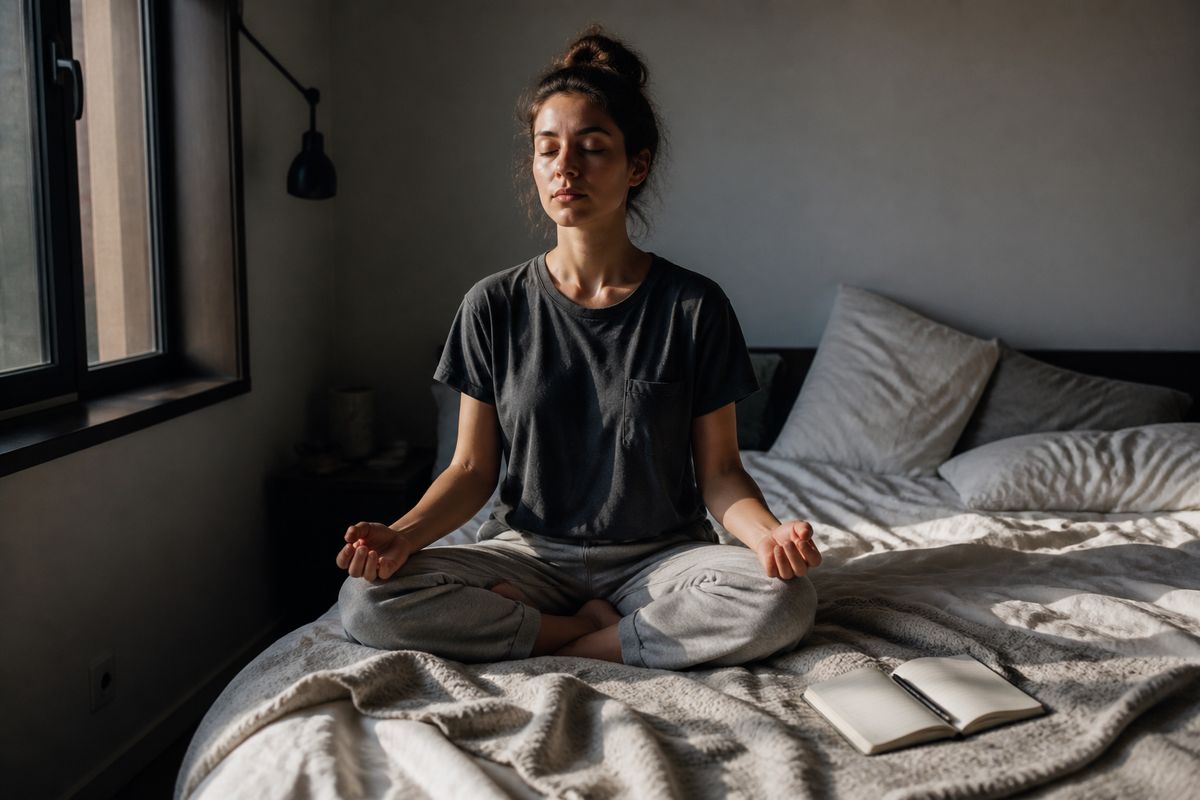
Simple rituals to cultivate mindfulness every day don't require a meditation cushion or an hour of free time. Mindfulness is just the practice of noticing what's happening in your body, your surroundings, and your thoughts without immediately reacting to it. The rituals below are short, specific, and built around moments you already have in your day: waking up, eating, walking, listening, and winding down.
What mindfulness actually is (and isn't)
Mindfulness is paying attention, on purpose, to the present moment without judging it. It is not clearing your mind of all thoughts, and it will not make stress disappear. What it does, according to the research base behind mindfulness-based interventions, is change your relationship to stress and distraction so you react a little less automatically. That's a modest, useful claim, and it's the one this article is making.
Why a daily ritual works better than good intentions
A ritual is just a habit with a fixed trigger and a fixed order of steps, which is why it survives busy weeks better than a vague plan to "be more mindful." Attach the practice to something that already happens daily, such as waking up or your commute, and you remove the decision of when to do it.
1. A 5-minute morning routine
Get up 10-15 minutes earlier. You're not adding a big block of time, just enough to not start the day rushed.
Do 2-3 minutes of slow breathing. Sit on the edge of the bed, inhale through your nose for a count of 4, let your belly expand, and exhale through your mouth for a count of 6. This slower exhale is what shifts you out of a stress response. In an 8-week study of healthy adults, 20 sessions of diaphragmatic breathing training lowered cortisol and reduced negative mood compared to a control group, alongside gains in sustained attention (Ma et al., Frontiers in Psychology, 2017). You won't match a lab protocol in 3 minutes, but the direction of the effect is the same: slower breathing, calmer state.
Write down 2-3 things you're grateful for. Keep it specific ("the coffee my partner made me" beats "family"). Research on gratitude journaling has linked the habit to better sleep and lower blood pressure over time (University of Rochester Medical Center), which is a reasonable payoff for two minutes of writing.
2. Mindful eating at one meal a day
You don't need to do this at every meal. Pick one, usually lunch or dinner, and try it there.
Put your phone in another room and sit down to eat, even if it's a 10-minute lunch.
Chew each bite fully before the next one. It takes roughly 20 minutes for your brain to register that you're full, so eating on autopilot means you can blow past that signal before it arrives (Harvard Health Publishing). Slowing down doesn't guarantee you'll eat less, but it gives the fullness signal time to catch up.
Name one flavor or texture out loud (or in your head) per bite for the first few minutes of the meal. This is the part that actually anchors your attention; the chewing alone won't do it if your mind is elsewhere.
3. A 10-minute walking practice
Walk somewhere without a podcast or a phone call, even if it's just to your mailbox and back.
Match attention to your feet for the first minute, noticing heel-to-toe contact, then widen out to sound, then to what you can see. Moving through the senses one at a time is easier than trying to notice everything at once.
4. Mindful listening in one conversation a day
Pick one conversation, ideally with someone you live or work with, and put your phone face-down and out of reach for it.
Let them finish before you start forming your reply. This is the actual skill; most of us start planning our response halfway through the other person's sentence.
Reflect back one sentence ("so the deadline moved to Friday, that's what's stressing you out") before you respond. It's a small habit that reliably makes people feel heard, and it forces you to have actually listened.
5. A one-minute reset, a few times a day
Set two or three alarms, for example at 11am and 3pm, labeled "pause."
When it goes off, do one round of box breathing: inhale for 4 counts, hold for 4, exhale for 4, hold for 4. Repeat for one minute.
Ask yourself one question: "What am I feeling in my body right now?" You're not trying to fix anything, just noticing tension in your jaw, shoulders, or stomach.
6. An evening wind-down
Put screens away 30 minutes before bed if you can manage it. Blue light from phones and laptops can delay melatonin release and push back your sleep onset, which is why sleep researchers recommend keeping devices out of the last stretch before bed (Sleep Foundation). If 30 minutes isn't realistic, even 10 minutes of reading or stretching instead of scrolling is a step in the right direction.
Stretch for 5 minutes, paying attention to where you feel tightness rather than rushing through the motions.
Write 3-5 sentences about your day: one thing that went well, one thing that was hard, one thing you noticed about how you felt. This is different from the gratitude list in the morning; it's a quick debrief, not a positivity exercise.
7. Ten minutes outside
If you can get outside for 10-15 minutes a day, use it as a sensory reset rather than a chance to check your phone. Notice temperature on your skin, the specific sounds around you, and what's changed since yesterday (new leaves, a different sky). None of this requires a park; a backyard or a walk around the block works.
8. Set boundaries with your phone
Pick 2-3 fixed windows for email and social media instead of checking on every notification.
Try one screen-free day a week, or even a screen-free morning, if a full day isn't realistic with work or family obligations.
What these rituals do and don't do
Done consistently, these practices can help you feel calmer, more focused, and less reactive to minor stressors. They are not a treatment for anxiety disorders, depression, or trauma, and they won't erase a genuinely stressful job or relationship. If you're dealing with a clinical mental health issue, mindfulness can be a helpful supplement to treatment, not a replacement for it. The realistic goal is small: a few minutes of your day where you're actually present instead of on autopilot, repeated often enough that it becomes normal.
FAQ
How long before I notice a difference?
Most people report feeling calmer within the first few sessions, but the more durable changes, like reacting less sharply to stress, tend to show up over several weeks of consistent practice, not a single session.
Do I need to do all eight rituals?
No. Pick one or two that fit your actual schedule, the morning routine and the evening wind-down are the easiest starting points, and add more once those feel automatic.
What if I miss a day?
Skip it and pick the ritual back up the next day. A missed day doesn't undo the practice; treating it as a failure and quitting does.
Sources
- Ma et al., 'The Effect of Diaphragmatic Breathing on Attention, Negative Affect and Stress in Healthy Adults,' Frontiers in Psychology, 2017
- University of Rochester Medical Center, 'Can Gratitude Benefit Your Health?'
- Harvard Health Publishing, 'Slow down-and try mindful eating'
- Sleep Foundation, 'How Does Blue Light From Electronic Devices Affect Sleep?'