
The Benefits of Family Meals: Eating Together for Health
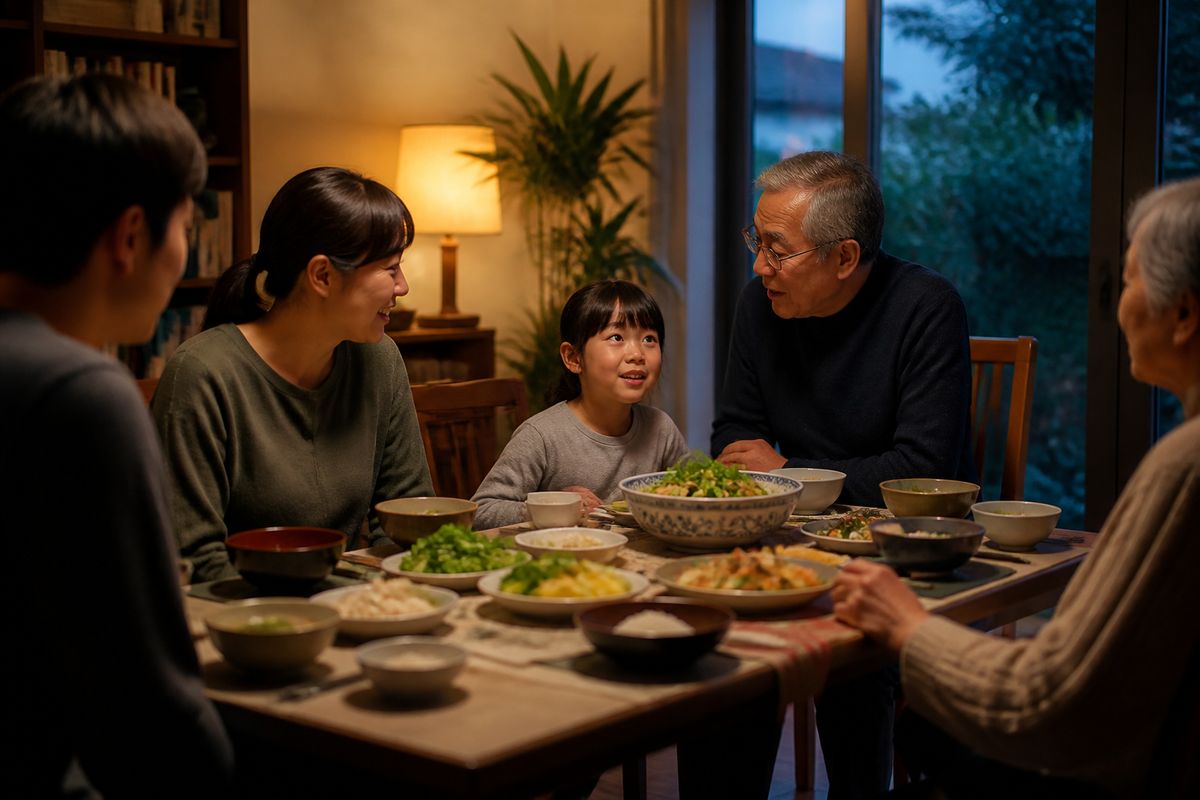
The benefits of family meals show up in research on nutrition, mental health, and teen behavior, even though most families today eat together far less than they used to. You don't need a formal sit-down dinner every night to get the benefits; what matters more is consistency and a few basic habits at the table.
What the Research Actually Shows
Better Nutrition, With a Specific Mechanism
Home-cooked meals give you control over ingredients and portions that fast food and pre-packaged meals don't. But the effect isn't just "eating at home," it's partly about time. A randomized clinical trial found that when family meals ran about 10 minutes longer, children ate significantly more fruits and vegetables during that meal, roughly 3 to 4 more pieces, without eating more bread, cold cuts, or dessert. That's around one extra portion of produce per meal just from slowing down, not from serving different food.
Practical takeaway: if you already cook at home, the fastest upgrade is not a new recipe. It's staying at the table 10 minutes longer and putting cut fruit or vegetables within reach.
Lower Risk of Certain Problem Behaviors, With a Caveat
A systematic review of family meal research found that eating together more often is inversely associated with disordered eating, alcohol and substance use, and depressive symptoms in youth, and positively associated with self-esteem and school success (Berge et al., systematic review, National Institutes of Health). The protective effect was notably stronger for girls than for boys across most of the outcomes studied.
Survey data comparing teens who eat 5 to 7 family dinners a week to teens who eat fewer than 3 found the frequent-dinner group was about four times less likely to say they'd tried tobacco, roughly half as likely to report alcohol use, and about 2.5 times less likely to report marijuana use (CASA Columbia data, cited by The Family Dinner Project). These are associations from self-report surveys, not controlled experiments, so eating dinner together isn't a guaranteed prevention plan. It's one marker of a household with more supervision, structure, and communication, which are the things actually doing the work.
Honesty check on academics: some articles claim family dinners directly raise grades. A study that used stricter statistical controls (tracking the same children over time instead of just comparing different families) found no significant link between meal frequency and academic or behavioral outcomes once other family factors were accounted for (Miller, Waldfogel & Han, Child Development). The honest read: family meals correlate with better outcomes in simple comparisons, but the meal itself is probably a marker of a stable, engaged household rather than the direct cause of better grades.
Social Skills and Emotional Check-Ins
Regular meals give kids repeated, low-pressure practice at conversation: taking turns, listening, and describing their day in more than one word. This is ordinary skill-building through repetition, not a special property of food; the same thing happens on a regular walk or car ride. The advantage of the dinner table is that it's easy to make it a fixed, recurring habit.
How to Actually Do This
Pick a Realistic Number, Not "Every Night"
Aiming for 4 to 5 meals a week together is more sustainable than an all-or-nothing "every night" rule, and it's roughly the threshold used in most of the research above. If your schedule only allows breakfast some days, breakfast counts.
Set a 20-Minute Floor
Since the fruit-and-vegetable effect above showed up specifically when meals ran about 10 minutes longer, treat a meal under 10 to 15 minutes as "refueling" and aim for at least 20 minutes when you can. Put phones in another room; a phone on the table measurably shortens conversation and attention even when it's not being used.
Put Produce Within Arm's Reach
Cut fruit or raw vegetables set on the table, not just "available in the fridge," get eaten more, especially by younger kids who won't get up to fetch them mid-meal.
Ask One Specific Question
Open-ended but specific prompts work better than "how was your day," which invites "fine." Try "what's one thing that was annoying today" or "who did you sit with at lunch," questions with a concrete answer.
Rotate Who Helps
Involving kids in prep, even just setting the table or rinsing vegetables, is a cheap way to add ownership and teach basic cooking and budgeting skills without turning dinner into a lecture.
What Family Meals Don't Fix
Eating together is a habit that supports connection and gives you a repeated opportunity to notice how your kids are doing. It's not a substitute for addressing an actual mental health concern, a struggling grade, or a suspected substance problem. If something specific is wrong, family meals are a supportive routine to keep, not the treatment.
FAQ
Does it have to be dinner?
No. The research generally counts any shared meal; breakfast works if evenings don't. Consistency matters more than which meal it is.
What if my teenager doesn't want to talk?
That's normal and doesn't mean the meal isn't doing anything. Showing up consistently, without pressing for conversation every time, still keeps the routine and the low-key check-in opportunity available.
Does ordering takeout together count?
Partially. You get the togetherness and conversation benefits, but not the nutrition control that comes from cooking at home, since you can't adjust ingredients or portions the same way.
Sources
- JAMA Network Open - Effect of Longer Family Meals on Children's Fruit and Vegetable Intake: A Randomized Clinical Trial
- PMC (NIH) - Systematic review of the effects of family meal frequency on psychosocial outcomes in youth (Berge et al.)
- The Family Dinner Project - citing CASA Columbia (National Center on Addiction and Substance Abuse) survey data
- PMC (NIH) - Miller, Waldfogel & Han, 'Family Meals and Child Academic and Behavioral Outcomes,' Child Development