
The Power of Rituals in Building Resilience
The power of rituals in building resilience comes down to something simple: a repeated, structured action gives your mind a foothold when everything else feels unstable. Resilience is not a fixed trait you either have or lack. It is the capacity to keep functioning and recover after stress, setbacks, or loss, and it is built through practice, not willpower alone. Rituals, whether that is a five-minute morning routine or a specific way you mark the anniversary of a hard year, are one of the more practical tools for building that capacity because they are concrete, repeatable, and don't depend on your mood on any given day.
What Counts as a Ritual
A ritual is a sequence of actions performed the same way, on purpose, often carrying meaning beyond the actions themselves. That's different from a habit, which can be automatic and mindless (biting your nails, checking your phone). A ritual is deliberate: you decide to light a candle before you write, or you always call your sister on Sunday. The structure and the intention are what do the psychological work, not the specific actions.
What the Research Actually Shows
A peer-reviewed EEG study on ritual behavior found that people who practiced a scripted daily hand-and-breathing sequence for a week showed a dampened neural response to their own mistakes afterward, compared to a control group doing unstructured movements. Their brains registered errors with less alarm. The researchers were careful to note this did not translate into measurably better performance on the task itself, so the honest claim is narrower than "rituals make you perform better": the evidence supports rituals lowering the felt intensity of setbacks, not guaranteeing better outcomes. That distinction matters. A ritual is not a performance hack. It's a way to keep a mistake or a bad day from spiraling into panic.
The practical takeaway: use rituals to manage your reaction to stress, not to promise yourself a specific result. That is a mindset tool, not a mechanism for controlling outside events.
Four Types of Rituals, and What Each One Is Actually For
Different rituals do different psychological jobs. Picking the wrong one for the situation is a common reason people give up on the practice.
1. Daily Anchors
These are short, repeated actions tied to a fixed point in your day: coffee plus ten minutes of journaling before checking your phone, or a two-minute stretch after you brush your teeth at night. The job of a daily anchor is predictability, not productivity. It works best when it's attached to something you already do without thinking, like a meal or brushing your teeth, because that existing habit becomes the cue.
2. Marking Rituals
Birthdays, work anniversaries, a specific meal you cook on the first snow of the year. These rituals aren't about resilience in the moment of crisis; they build resilience in advance by giving you a backlog of positive, predictable memories you can draw on later. Skipping them because "there's no time this year" is usually a mistake if the goal is long-term coping capacity.
3. Grief and Stress Rituals
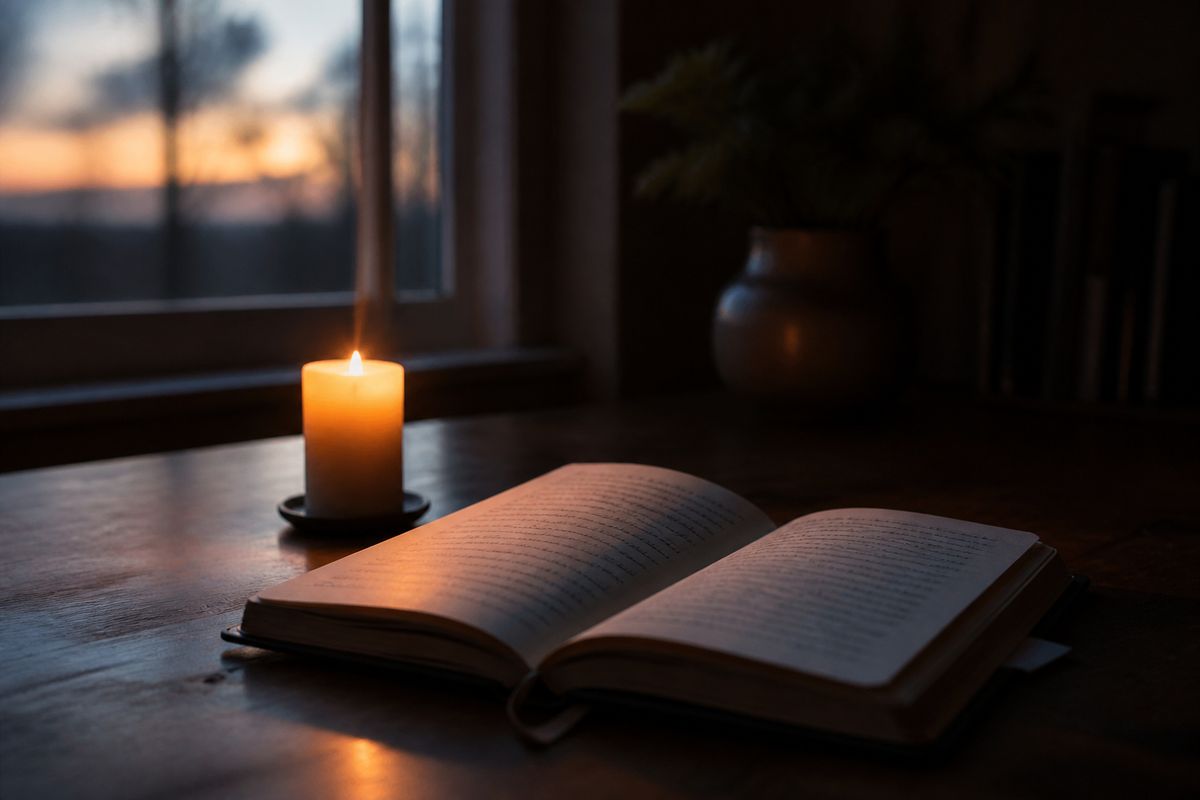
A specific action you do when something hard happens: lighting a candle on a difficult date, writing a letter you don't send, a particular walk you take after a bad phone call. These give a hard emotion somewhere to go instead of just sitting in your body unprocessed. They work through repetition and specificity, not through the object itself (the candle isn't magic; the consistency is what helps).
4. Transition Rituals
Graduations, moving-day routines, the ritual of clearing out a closet after a breakup. These mark the boundary between "before" and "after," which helps your brain file the change as complete rather than as an open loop you keep circling back to.
How to Build a Resilience Ritual That Actually Sticks
Most rituals fail in the first two weeks because people start too big or too vague. Here's a sequence that holds up better.
Step 1: Name the Specific Stressor
"I want to be more resilient" is too vague to build a ritual around. "I fall apart after criticism at work" or "Sunday nights make me anxious about the week ahead" gives you something to design against.
Step 2: Pick One Action, Under Five Minutes
Three lines in a notebook. One deep-breathing cycle of four counts in, four counts out, repeated five times. A single sentence naming what went well that day. The size is the point: a ritual you can't skip because it's too easy to do is one you'll still be doing in six months.
Step 3: Attach It to an Existing Cue
UCL researchers tracking 96 people over 12 weeks found it took an average of 66 days for a new daily action to start feeling automatic rather than effortful, and the behaviors that solidified fastest were the ones consistently tied to an existing routine, like "right after breakfast," rather than a vague time of day: UCL's habit-formation study. Translate that into your ritual: don't aim for "sometime in the evening," aim for "right after I turn off the kitchen light."
Step 4: Expect the First Month to Feel Like Nothing
Sixty-six days is roughly two months. If you quit at day 10 because it "isn't working yet," that's the expected timeline failing, not the ritual. Track it on a calendar with a checkmark. The visual streak does more to keep you going than motivation does.
Step 5: Review and Adjust Every Few Weeks
If a ritual has stopped feeling meaningful, change the details, not the whole practice. Swap journaling prompts, change the time of day, add or drop a step. The goal is a structure that still feels like yours a year in, not a script you're forcing yourself through.
Gratitude Rituals: What the Evidence Supports
Gratitude journaling is one of the most-studied ritual practices, and it's worth being precise about what it does. It does not attract money or opportunities into your life. What it does do: research summarized by the University of Rochester Medical Center links consistent gratitude practices, including journaling, with reduced stress, improved mood, and better sleep, most likely because deliberately noticing positive details shifts what your attention defaults to over time: University of Rochester Medicine on gratitude and mental health. That's a real, modest, and useful effect. It's a mood and attention tool, not a request you're sending to the universe.
A workable version: three specific things at the end of each day, written as full sentences, not single words. "My coworker covered my shift without me asking" does more for you than "family, health, coffee" repeated every night, because specificity is what keeps the practice from going stale.
Community and Shared Rituals
Individual rituals build personal resilience. Shared ones, a team's pre-game routine, a family's Sunday dinner, a neighborhood's annual block party, do something additional: they give a group a repeated, low-effort reason to stay in contact. Communities that maintain shared rituals tend to mobilize support faster during an actual crisis, simply because the social contact already exists before the crisis hits. If your goal is resilience for a family or a team, not just yourself, the ritual that matters most might not be the one you do alone.
What Rituals Won't Do
Worth being blunt about this: a ritual will not resolve a genuine crisis, replace treatment for anxiety or depression, or override a situation that actually needs a practical decision (quitting a job, ending a relationship, seeing a doctor). Rituals are a support structure for your nervous system and your follow-through, not a substitute for action or professional help when either is what's actually needed. If a ritual becomes something you feel compelled to do, and skipping it causes real distress rather than mild inconvenience, that's worth mentioning to a mental health professional rather than pushing through alone.
FAQ
How long before a ritual actually feels helpful?
Give it at least a month before judging it, and don't expect it to feel automatic before roughly two months of consistent repetition, in line with the UCL habit-formation research above. Judging a ritual after four days is judging it too early.
Do rituals need to be spiritual or religious to work?
No. The psychological benefit comes from repetition and structure, not from any specific belief system. A completely secular five-minute routine works through the same mechanism as a religious one.
What if I miss a day?
Missing one day rarely breaks a ritual's effectiveness. Missing a week usually means redesigning it smaller, since the size or timing was probably the issue, not your discipline.
Can a ritual replace therapy or medication for anxiety?
No. Rituals can support day-to-day coping and mood, but they are not a clinical treatment. If anxiety or grief is interfering with daily functioning, that calls for a licensed professional in addition to, not instead of, any personal ritual.